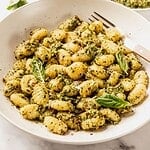
Pistachio Pesto (with Basil and Mint)
My Mint and Basil Pistachio Pesto recipe is a fresh and slightly sweet take on the classic Genovese basil pesto. And it comes together in under 10 minutes. Toss it with pasta for an easy meal, slather it on bruschetta, add it to a cheese board, or fold it into a salad dressing.
Servings: 6 Servings
Cost: $15
Equipment
- Small food processor - Affiliate link
Ingredients
- 2 cup Fresh basil leaves
- ½ cup Fresh mint leaves
- ½ cup Toasted shelled pistachios
- ½ cup Grated parmesan
- 1 tbsp Lemon zest - From 1 lemon
- 2 tbsp Lemon juice - From 1 lemon
- ⅓-½ cup Extra virgin olive oil
- Salt and pepper to taste
Instructions
- Toast your Pistachios (Optional). If you are using untoasted pistachios, lightly toast them in a 300F oven for 5-10 minutes.
- Blend the Base. Add the basil, mint, pistachios, Parmesan, garlic, lemon zest, and lemon juice to a food processor. Pulse until everything is finely chopped and combined.
- Add Oil. With the processor running, slowly drizzle in the extra virgin olive oil until the pesto becomes smooth and creamy.
- Season. Season with salt and freshly ground black pepper. Blend briefly, then taste and adjust seasoning as needed.
- Store or Serve. At this point, you can store your pesto in a glass jar in the fridge. Or toss with short pasta and finish with freshly grated Parmesan and more basil before serving.
Notes
Refer to the blog post above if you need step-by-step recipe photos.
Key Ingredient Notes:
- Fresh Basil leaves: The classic pesto base; you can swap part of it with arugula for a peppery kick.
- Mint leaves: Adds brightness and freshness; optional but highly recommended.
- Parmesan Cheese: I like to use Parmigiano Reggiano. It adds saltiness and richness. I do prefer to grate it myself before adding it to the blender, but you can also use pre-grated. I don’t recommend using shelf-stable Parmesan in the can! Pecorino can work too for a sharper finish. Or keep the recipe vegan by using nutritional yeast instead.
- Pistachios: Wouldn’t be a Pistachio Pesto without the pistachios. Use toasted pistachios if you can, but if you only have access to raw pistachios, you should toast them.
- You can make it in advance and keep it in the fridge until you’re ready to use it. It’s a great prep-ahead sauce for pasta nights, sandwiches, or grain bowls. It should last in the fridge for 5 days.
- Store the pesto in an airtight container in the refrigerator. I prefer glass over plastic as plastic Tupperware may stain. A thin layer of olive oil on top can help protect the surface from oxidation.
- Pistachio pesto freezes very well. You can freeze it for up to 3 months for the best quality, but I have used 6-month-old frozen pesto just fine. Portioning it into small containers or cubes makes it convenient.
Nutrition
Calories: 205kcal | Carbohydrates: 5g | Protein: 5g | Fat: 19g | Saturated Fat: 4g | Polyunsaturated Fat: 3g | Monounsaturated Fat: 12g | Cholesterol: 7mg | Sodium: 148mg | Potassium: 172mg | Fiber: 2g | Sugar: 1g | Vitamin A: 697IU | Vitamin C: 6mg | Calcium: 109mg | Iron: 1mg
To see the web version with photos, tips
and FAQs, scan the QR code or visit:
https://urbanfarmandkitchen.com/pistachio-pesto-with-basil-and-mint/