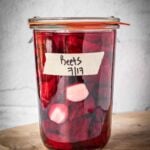
Fermented Beets (Lacto-Fermented Beet Recipe)
This recipe for Fermented Beets is a great way to start your fermentation journey. Whether you are a beginner or an expert fermenter, this recipe breaks down everything you need to know from equipment to fermenting safely. All you need are a few simple and fresh ingredients as well as time to make this lacto-fermented beetroot recipe.
Servings: 10 Servings
Cost: $5
Equipment
- ¾ Quart Jar – 24-ounce (~750ml) Mason Jars
- Regular canning jar lids
Ingredients
- 2 cups Fresh un-chlorinated water - Filtered or spring water - 475ml
- 1 tbsp Kosher, pickling or sea salt - 17 grams
- 2-4 Garlic cloves
- 2-3 Beets - Peeled and cut into small chunks or slices
After Fermentation is Complete
- 1-2 tbsp White vinegar - Optional (to be used after fermentation is complete)
Instructions
- Prepare the Brine. In a large measuring cup or jug, combine the fresh water with salt. Mix well to dissolve the salt.
- Pack the jar. To your clean jar, add the garlic cloves and beet slices.
- Add weight. Apply the fermentation weight (if using), making sure that it sits below the rim of the jar.
- Pour brine. Carefully pour enough brine solution to cover the beets.
- Add fermentation lid. Apply the fermentation lid to the top of the jar.
- Ferment. Ferment the beets for at least 5 days away from direct sunlight. On day 5, taste the beets. If you want them to be tangier and sourer, replace the weight and lid and continue to ferment for a few more days. If you’re happy with the taste, remove the weight, and fermentation lid. Add the optional vinegar, apply a regular lid and place the ferment in the fridge.
Notes
Refer to the post above for step-by-step recipe photos.
Ingredient notes:
- Beets: You can ferment any type of beet in this recipe. Red beets are of course widely available, but you’ll find golden beets and even candy cane beets in grocery stores and farmer’s markets these days. Choose medium beets.
- Salt: When fermenting, use kosher salt, pickling salt, or sea salt. Don’t use table salt as it has added iodine which can possibly hinder fermentation.
- Garlic: Another classic ingredient. I love using garlic in ferments but the choice is up to you.
- Vinegar (at end of ferment): This is completely optional. I like using neutral white distilled vinegar as it won’t affect the overall flavor but feel free to use another acid like white wine vinegar, apple cider vinegar, or even lemon juice or lime juice. Avoid using dark vinegar like balsamic or red wine. Adding vinegar is optional, but I recommend it as it helps balance out the flavor and will also help with preserving the pickles for longer in the fridge.
Nutrition
Calories: 8kcal | Carbohydrates: 2g | Protein: 0.3g | Fat: 0.03g | Saturated Fat: 0.01g | Polyunsaturated Fat: 0.01g | Monounsaturated Fat: 0.01g | Sodium: 713mg | Potassium: 56mg | Fiber: 0.5g | Sugar: 1g | Vitamin A: 5IU | Vitamin C: 1mg | Calcium: 6mg | Iron: 0.1mg
To see the web version with photos, tips
and FAQs, scan the QR code or visit:
https://urbanfarmandkitchen.com/fermented-beets-lacto-fermented-beet-recipe/