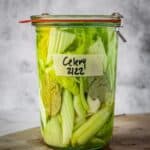
How to Make Fermented Celery (Easy and Delicious)
Fermented Celery is delicious, tangy and a great way to transform fresh celery into something much more flavorful. Whether you are a beginner or an expert fermenter, this recipe breaks down everything you need to know from equipment to fermenting safety. All you need are a few simple and fresh ingredients and a little time.
Servings: 15 Servings
Cost: $5
Equipment
- ¾ quart mason jar (24 fl oz mason jar)
- Regular canning jar lid
Ingredients
- 2 cups Fresh unchlorinated water
- 1 tbsp Kosher salt, sea salt or pickling salt
- ½ Head of celery - Cleaned, trimmed and cut into wedges or pieces
- 1-2 Garlic cloves
- 1-2 Bay leaves
Instructions
- Prepare the saltwater brine. In a large measuring cup or jug, combine the water with salt. Mix well to dissolve the salt.
- Pack the jars. To your mason jar, add the garlic cloves, chopped celery and bay leaf. Pack tightly to reduce the air pockets.
- Add the fermenting weight. Add your fermentation weight to the jar, making sure that it does not go above the rim.
- Pour the brine. Carefully pour the brine solution into the jar, making sure all the celery is submerged. Tap the jar to release any air bubbles.
- Apply the fermentation lid. Add the fermentation lid to the jar.
- Ferment. Ferment the celery for at least 5 days away from direct sunlight on the counter. On day 5, give it a taste. If you want the celery to be tangier and sourer, replace the weight and lid and continue to ferment for a few more days (you acn go up to 2 weeks total). If you’re happy with the taste, remove the weight, and fermentation lid. Apply a regular lid and refrigerate.
Notes
Refer to the post above for step-by-step recipe photos.
A few Important ingredient notes:
- Celery: The stat of the show. Choose fresh, firm and blemish-free celery for this recipe. You ferment both the stalks and the inner leaves in this recipe.
- Herbs and Spices: I recommend using woody herbs. Bay leaf is great because it adds a hint of flavor but the tannins in the leaf help keep the ferment crunchy.
- Salt: When fermenting, use pickling salt, Kosher salt, or sea salt. Avoid using table salt as it has added iodine which may affect fermentation.
- Garlic: I love using garlic in all my ferments but the choice is up to you. Use more or less, or none at all.
Nutrition
Calories: 1kcal | Carbohydrates: 0.1g | Protein: 0.02g | Fat: 0.003g | Saturated Fat: 0.001g | Polyunsaturated Fat: 0.002g | Monounsaturated Fat: 0.001g | Sodium: 468mg | Potassium: 4mg | Fiber: 0.03g | Sugar: 0.02g | Vitamin A: 6IU | Vitamin C: 0.1mg | Calcium: 2mg | Iron: 0.01mg
To see the web version with photos, tips
and FAQs, scan the QR code or visit:
https://urbanfarmandkitchen.com/how-to-make-fermented-celery-easy-and-delicious/