Radishes (Raphanus sativus) belong to the Brassicaceae family alongside cabbage, broccoli, and mustard. This post covers varieties, how to grow radishes from seed, harvesting, storage, and culinary uses.
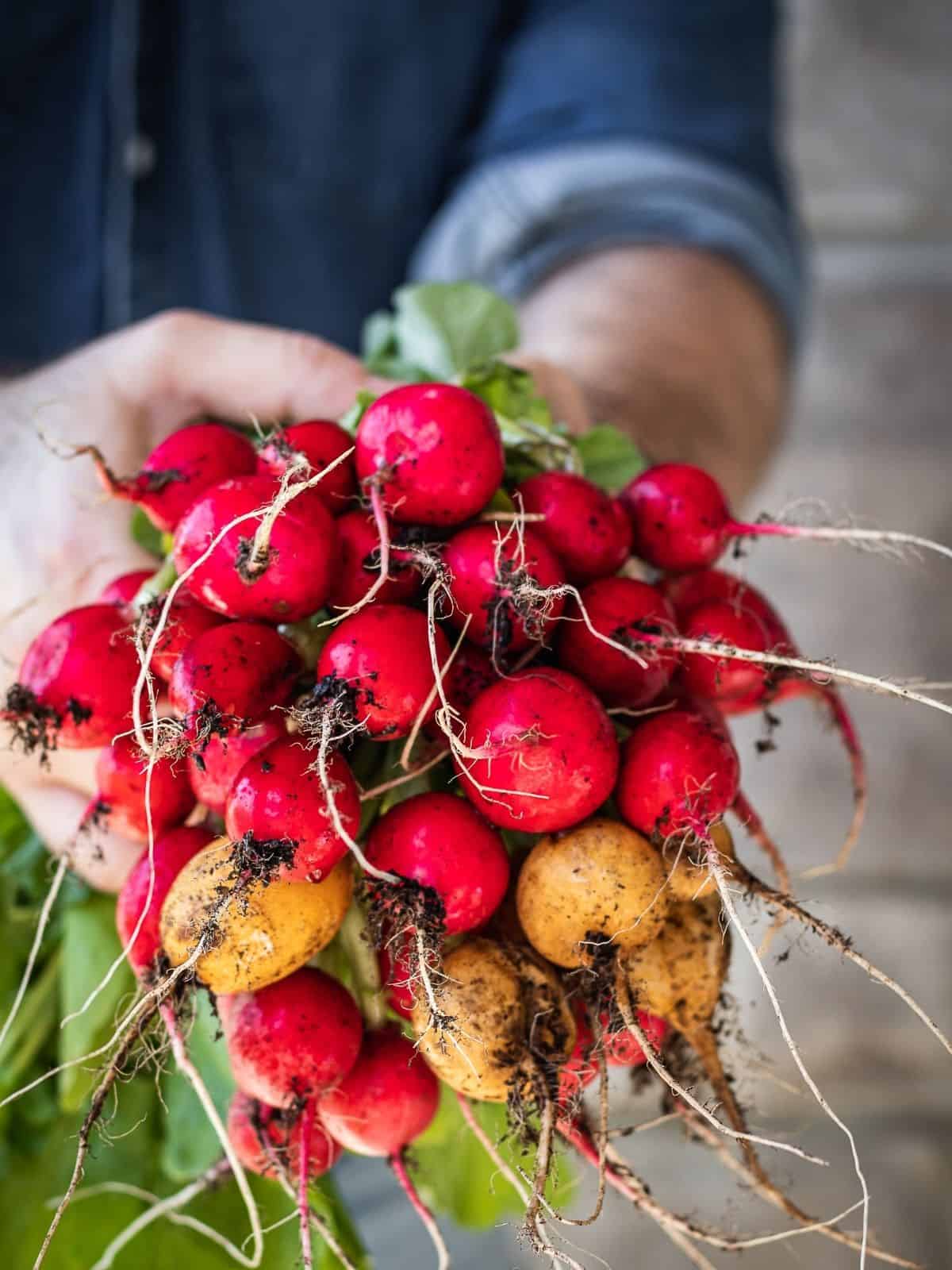
Table of Contents
Luay Ghafari

Luay is the creator, recipe developer, writer and photographer behind Urban Farm and Kitchen, a blog dedicated to fresh garden-to-table, Levantine and Mediterranean recipes. He’s also an Urban Gardener with 10+ years of experience and the author of Seed to Table.
Radish Overview
Radishes are among the fastest-maturing vegetables a gardener can grow. Spring radishes can be ready to harvest in as few as 18–25 days from seed, making them an excellent choice for succession planting, filling gaps in the garden calendar, and introducing children to gardening.
I grow them every spring and fall and there are so many incredible varieties to choose from.
Culinary Uses
Radishes are far more versatile than most home cooks realize. They are most commonly eaten raw (sliced into salads like in my Cucumber Radish Feta Salad, served with butter and salt as a simple snack, or shaved thinly for a crunchy garnish).
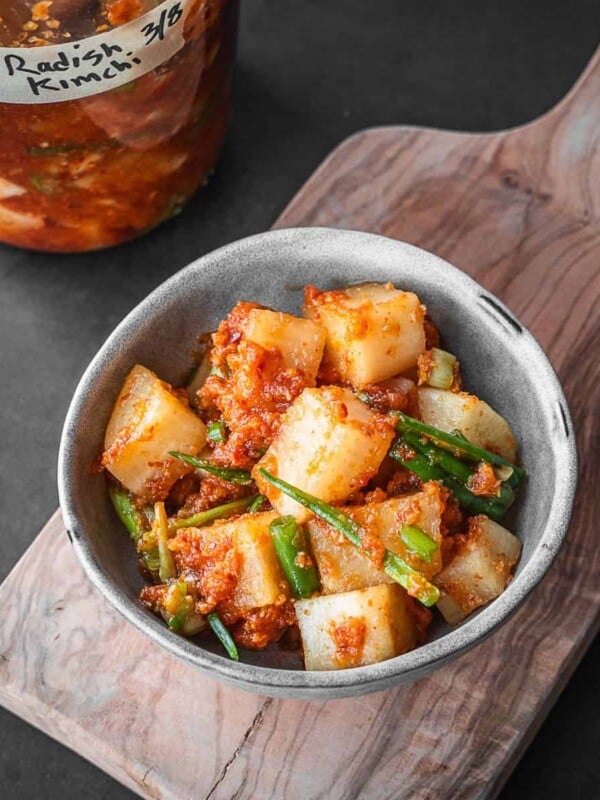
In Mexican cuisine, radishes appear as a fresh topping on tacos and soups. In Korean cooking, daikon radish is a fundamental kimchi ingredient (like in my Korean Radish Kimchi recipe).
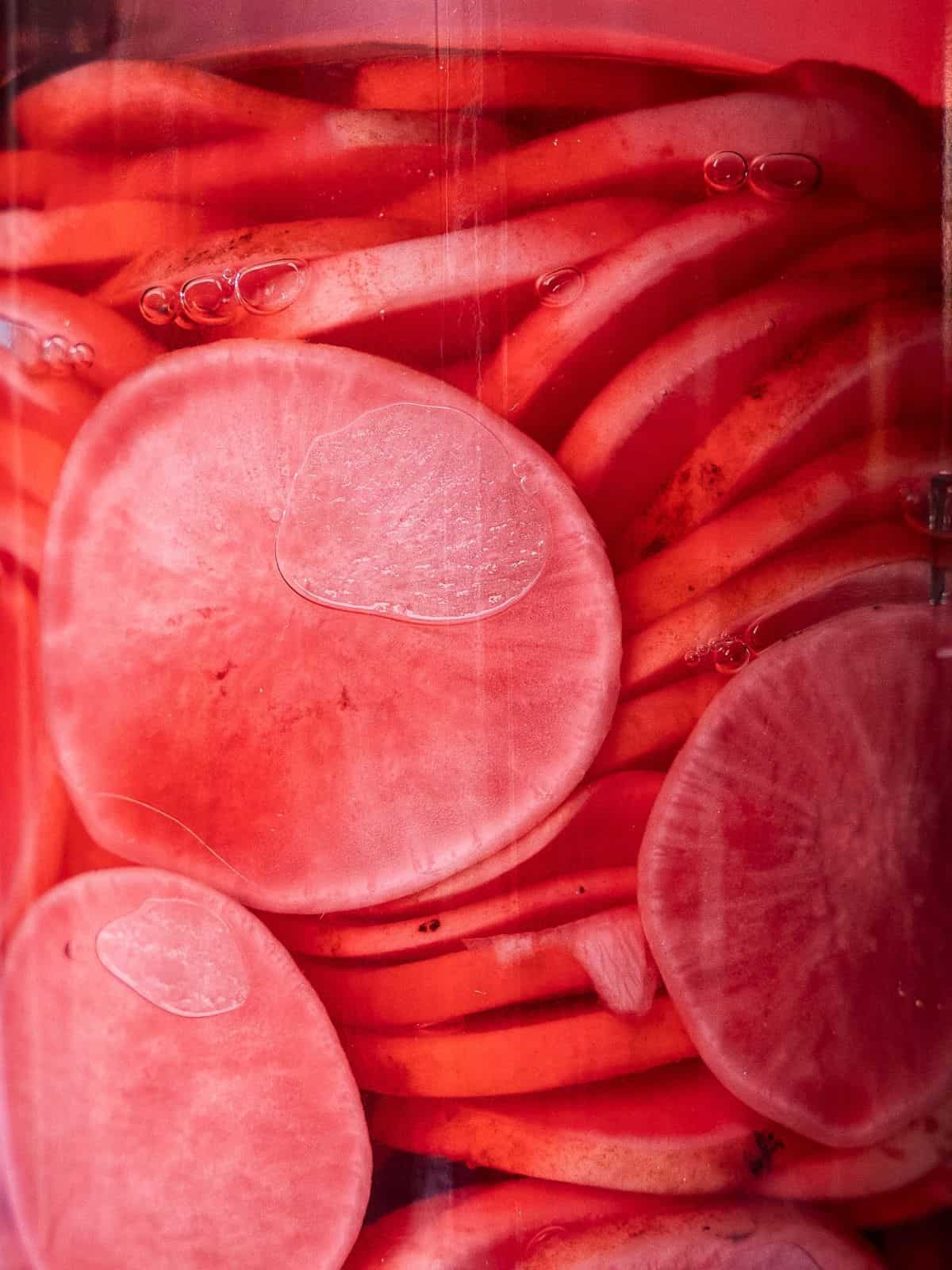
I personally love to pickle and ferment radishes (Lacto Fermented Radishes).
Cooking radishes mellows their sharpness and brings out a sweeter, more delicate flavor. Roasted or pan-sautéed radishes develop a texture similar to a tender turnip and are a revelation to those who only know them raw. Radish tops are also edible and can be cooked like any braising green.
Radish Recipes to Explore

Fermentation
Fermentation
Preservation

Salads
Radish Varieties
Radishes fall into two broad categories: spring/summer radishes, which are fast-maturing and best eaten fresh; and winter/storage radishes, which are larger, slower to mature, and store much longer.
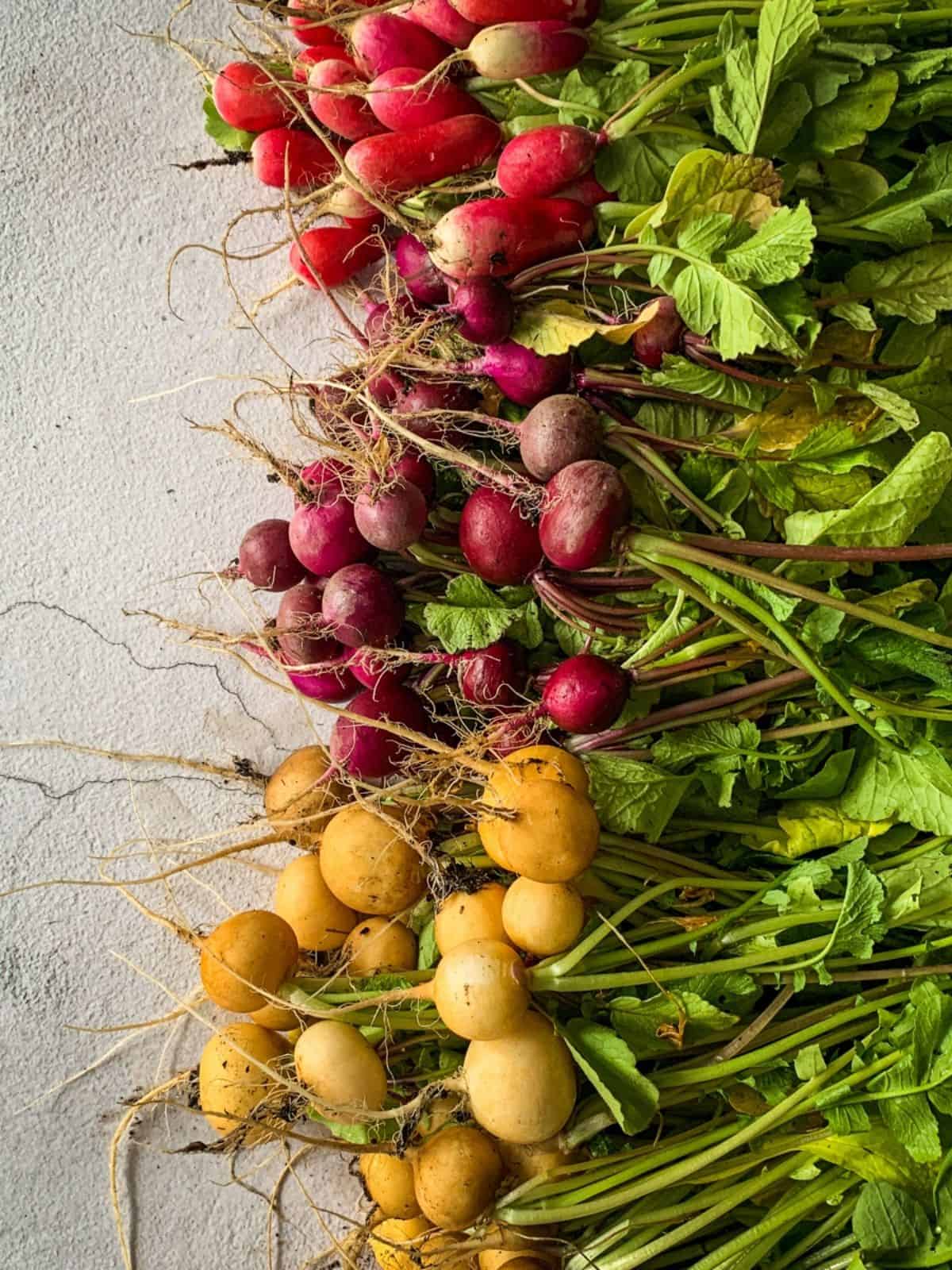
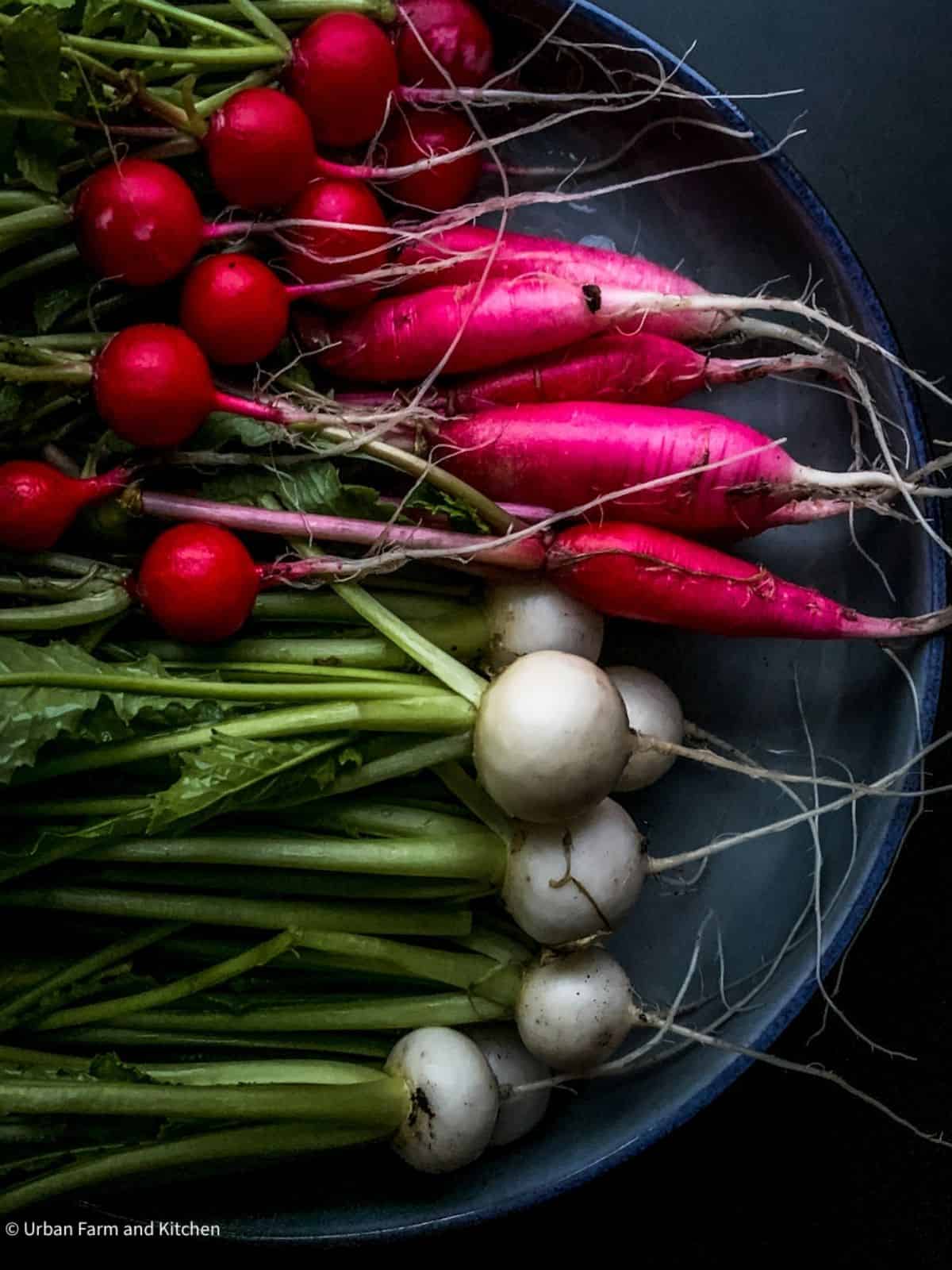
- Spring Radishes: Small, round, or elongated radishes harvested in 3–4 weeks. ‘Cherry Belle’, ‘French Breakfast’, and ‘Easter Egg’ are classic choices. These are best grown in cool weather and will bolt quickly in summer heat.
- Daikon: A long, white Japanese radish that can grow 12–18 inches in length. Much milder and less sharp than spring radishes. ‘Miyashige’ and ‘April Cross’ are popular varieties. Daikon is also an excellent cover crop for breaking up compacted soil.
- Watermelon Radish (Shinrimei): A striking winter radish with a green exterior and bright pink interior. Mild flavor and spectacular in salads and on charcuterie boards. Harvest at 2–4 inches in diameter.
- Black Spanish Radish: A large, round winter radish with rough black skin and sharp white flesh. Used in Eastern European cuisine, often grated raw with vinegar and onion.
- Rat-Tail Radish: Grown for its edible seed pods rather than its root. The pods are harvested young and have a crisp texture and mild radish heat. A unique conversation piece in the garden.
Growing Radishes in Small Gardens and Containers
Radishes are ideal for small gardens and containers. Spring varieties only need 6 inches of depth, making them suitable for shallow window boxes and raised beds. This is how I got my start growing them while living in an apartment with small balcony.
They are a useful filler plant and can be interplanted between slower-growing crops like tomatoes, squash, and carrots to make productive use of garden space while the main crops establish.
Winter radishes need more depth, at least 12 inches for daikon and similar large-rooted types. I would personally not grow winter varieties in containers, and only do those in the ground or in raised beds.
When to Plant
Radishes are cool-season crops that grow best in spring and fall. For spring planting, direct sow as soon as the soil is workable. Radishes tolerate light frost and prefer temperatures between 50°F and 70°F. In many regions, this means sowing from late March through May. Sow again in late summer (August into September) for a fall crop.
Avoid planting spring radishes in summer heat, as they bolt (go to flower) rapidly without forming a usable root. Winter varieties like daikon and watermelon radish are sown in midsummer for a fall harvest.
How to Plant
Direct Sowing Radishes
Radishes do not transplant well. Direct-sow seeds ½ inch deep, 1 inch apart, in rows 6 inches apart. Thin seedlings to 2–3 inches apart once they emerge. Crowded radishes will not form proper roots.
- Succession planting: Sow small batches of spring radishes every 10–14 days to ensure a continuous harvest rather than a single large flush.
- Moisture: Keep the soil consistently moist from sowing through harvest. Irregular watering causes cracking and pithy, tough roots.
- Thinning: Thin promptly. Overcrowded radishes produce small, forked, or misshapen roots. Use scissors to snip extra seedlings at soil level rather than pulling, to avoid disturbing neighbors.
How to Maintain
- Sun: Radishes prefer full sun but tolerate partial shade, which can actually slow bolting in warmer weather.
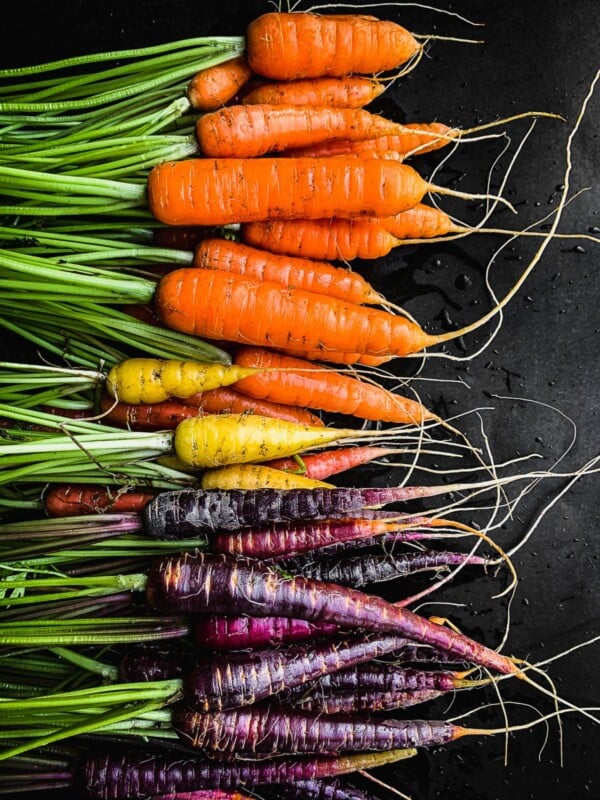
- Water: Consistent moisture is the most important factor in producing crisp, well-formed radishes (in the same way it’s important for Growing Carrots). Mulching around plants helps retain moisture.
- Fertilizing: Radishes are light feeders. If your soil is reasonably fertile with added compost, additional fertilization is generally unnecessary for spring radishes. Winter radishes, which grow for 60–70 days, benefit from a light side-dressing of balanced fertilizer mid-season.
Common Pests and Diseases
- Flea beetles: These pests leave small round holes in leaves. Row covers provide the most effective protection. Healthy plants can tolerate moderate flea beetle pressure without a significant impact on root quality.
- Root maggots: The larvae of the cabbage root fly burrow into roots, making them unmarketable. Row covers prevent egg-laying. Crop rotation can help reduce pest and disease buildup.
- Bolting: Technically not a pest or disease, but the primary challenge with radishes. Caused by heat, stress, or long days. Choose slow-bolt varieties for spring planting and time your sowings to avoid peak summer heat.
When to Harvest Radishes
Harvest spring radishes promptly at maturity. Check the seed packet for days to maturity and inspect roots at that point. Left in the ground too long, spring radishes become pithy, hollow, and very sharp. Winter radishes can stay in the ground longer and actually improve with light frost.
Gently loosen the soil around roots before pulling to avoid breaking them. In raised beds with loose soil, most radishes pull cleanly by hand.
The Best Way to Store Freshly Harvested Radishes
Remove the tops immediately after harvest, as the greens draw moisture from the roots and cause them to go limp and spongy. Store roots in a sealed bag or container in the refrigerator crisper with a slightly damp paper towel for up to two weeks.
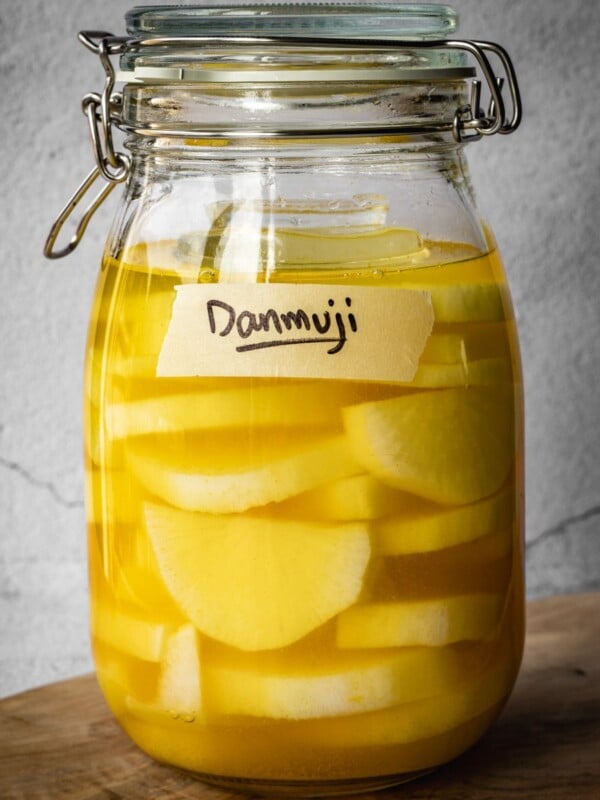
Winter radishes like daikon store much longer, up to several months in a cool root cellar or refrigerator. Radishes can also be pickled quickly in rice vinegar, sugar, and salt for a versatile condiment that keeps for several weeks in the refrigerator.
Other Grow Guides

Growing Guide
Gardening
Gardening

Gardening
If you have any questions, please take a moment to leave a comment below. It’s such a help to others who want to try the recipe.
For more Urban Farm and Kitchen, follow along on Instagram, Facebook, and Pinterest, visit the Urban Farm Shop, or subscribe for new posts via email.