
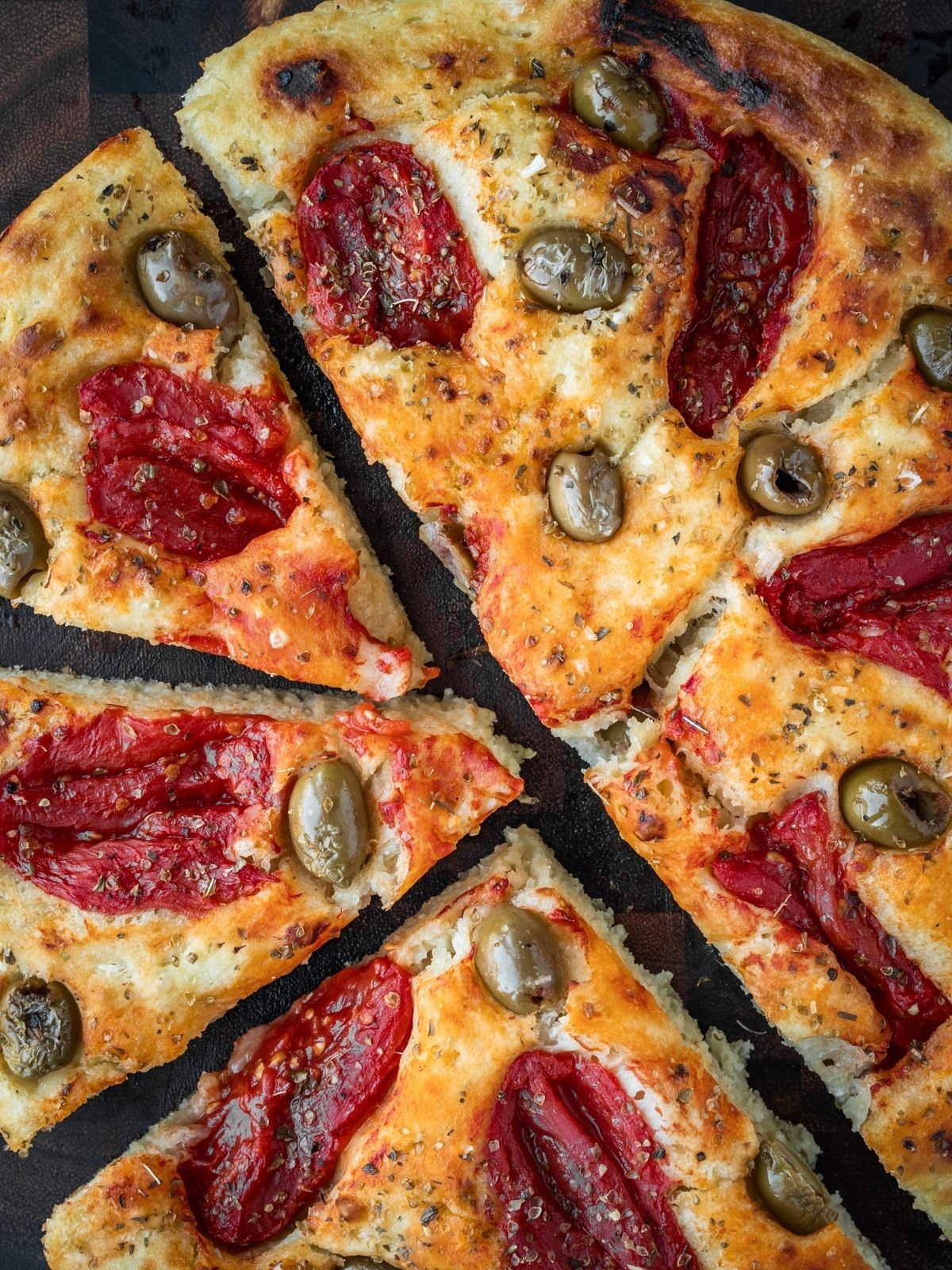
Wait, why is there a whole boiled potato in this focaccia recipe? This is what makes Focaccia Barese (or Focaccia from Bari) so interesting. The dough is made with a whole mashed yellow potato and a combination of both white and semolina flour, which gives you crusty edges and a tender, airy crumb.
Characterized by its round shape, this isn’t like the more common Genoese focaccia you may be used to. If you are looking for that instead, check out my Ultimate No Knead Focaccia bread Recipe and Guide for directions and flavor combination ideas.
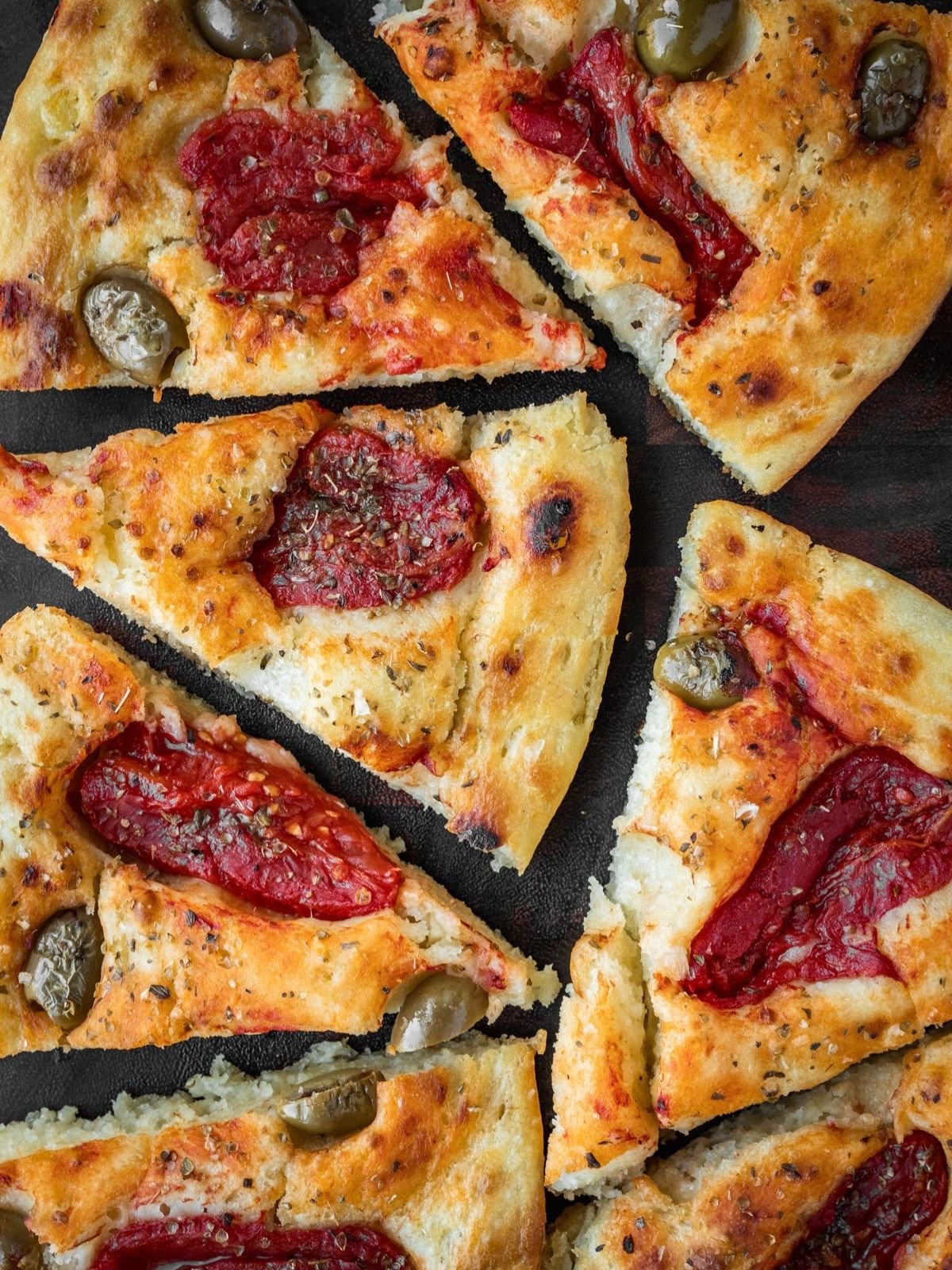
Table of Contents
Why This Recipe Works
- No kneading required. An overnight ferment in the fridge does all the heavy lifting for you. Just like in my other no-knead focaccia recipes: Tomato Focaccia, Fig Cheddar Focaccia and Jalapeno Cheddar Focaccia.
- Perfect all year. You can use canned tomatoes to make this year-round, but you can also use fresh local summer tomatoes.
- No fancy techniques are needed. No sourdough starter to feed and worry about! No slapping or folding of dough! No complicated shaping or scoring.
Ingredients
This Bari style focaccia recipe doesn’t call for any fancy ingredients, just simple pantry staples for the most part. Here’s what you will need:
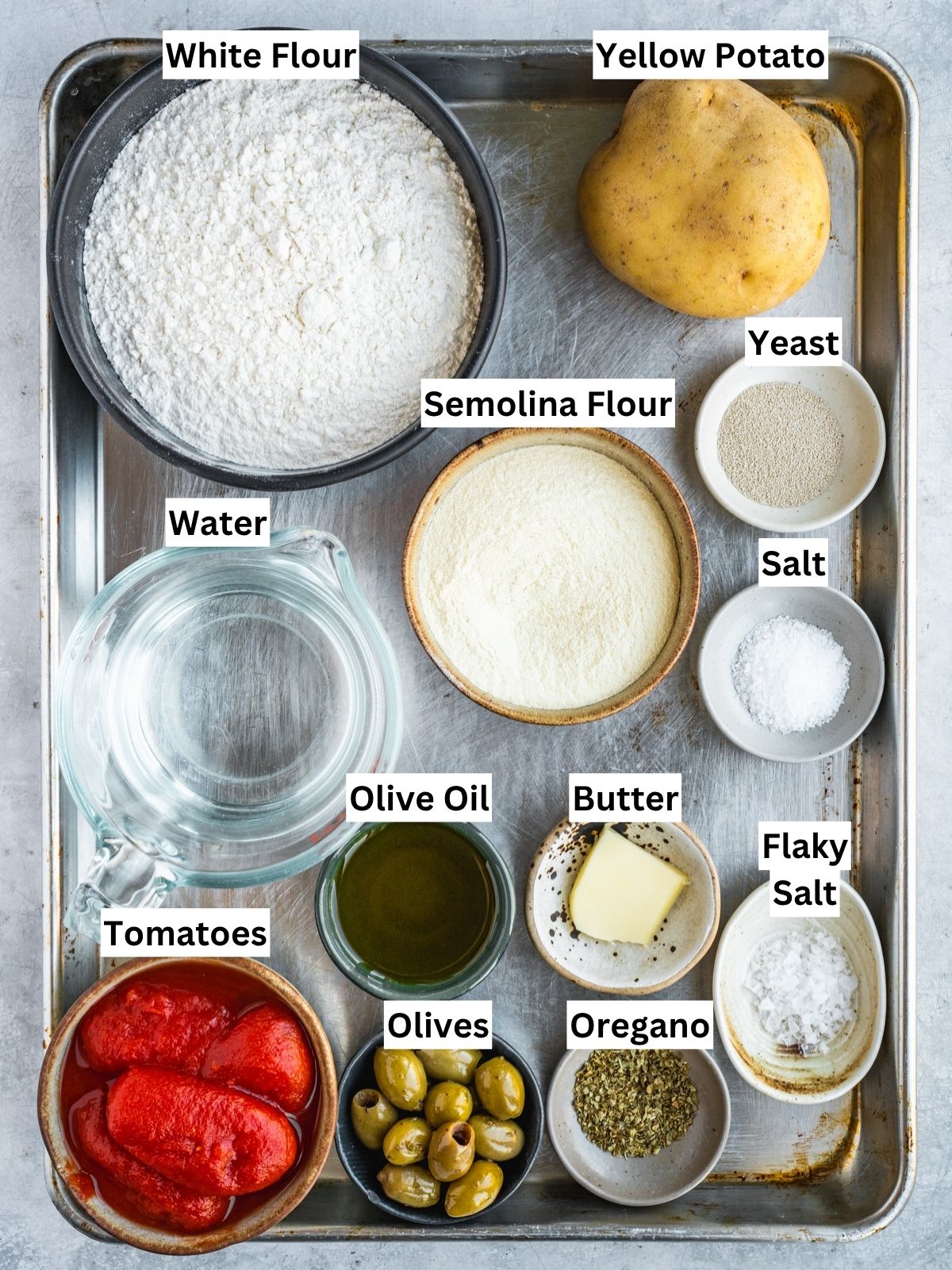
- All-Purpose Flour. The backbone of the dough, though you can use bread flour for a chewier texture. If you want to, you could switch some of the white flour out and replace it with whole wheat.
- Semolina Flour. Semolina is traditional, but I know most people don’t necessarily keep it stocked. So if you don’t have it, and you’re not going to the store anytime soon, replace it with white or whole wheat flour instead.
- Potato: This is where things get interesting. Traditionally, a boiled and mashed potato is incorporated into the dough. It adds softness. Use a yellow-fleshed Yukon gold type potato.
- Yeast: I like to use Instant yeast when making no knead bread, but dry active yeast will work just fine too. Just make sure to bloom it in the potato water for a few minutes before adding the flour. You can also use fresh yeast but do adjust the quantity. When using fresh yeast instead of dry, use double the amount by weight.
- Toppings: Traditionally, tomatoes (you can use canned whole tomatoes, halved ripe tomatoes or cherry tomatoes), green olives, dried oregano and salt are added to the focaccia before baking.
Refer to the recipe card at the bottom of this post for a full list of ingredients and quantities.
Step-by-Step Video Tutorial
How to Make this Focaccia Barese Recipe
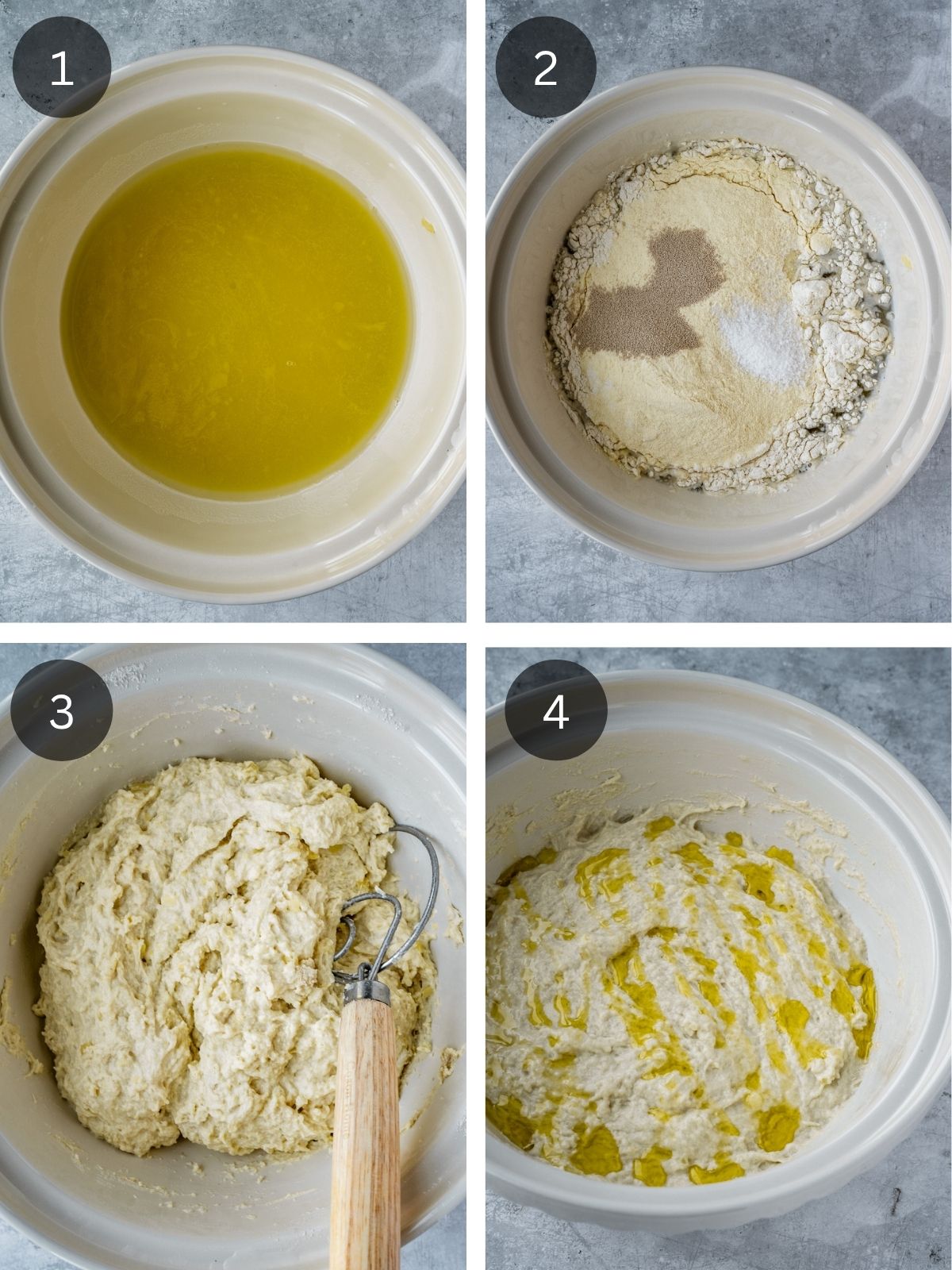
Step 1. Mix the liquid. In a large bowl, combine the boiled potato and lukewarm water. Mash until the potato is fully dispersed into the water (Image 1).
Step 2. Add the Dry Ingredients. Add the all-purpose flour, semolina, yeast, and salt to the bowl (Image 2).
Step 3. Mix. Mix everything together using a fork, wooden spoon, or dough mixer until combined (Image 3).
Step 4. Dough Rise. Drizzle with olive oil, cover the bowl with plastic wrap, and refrigerate for 18 hours (Image 4).
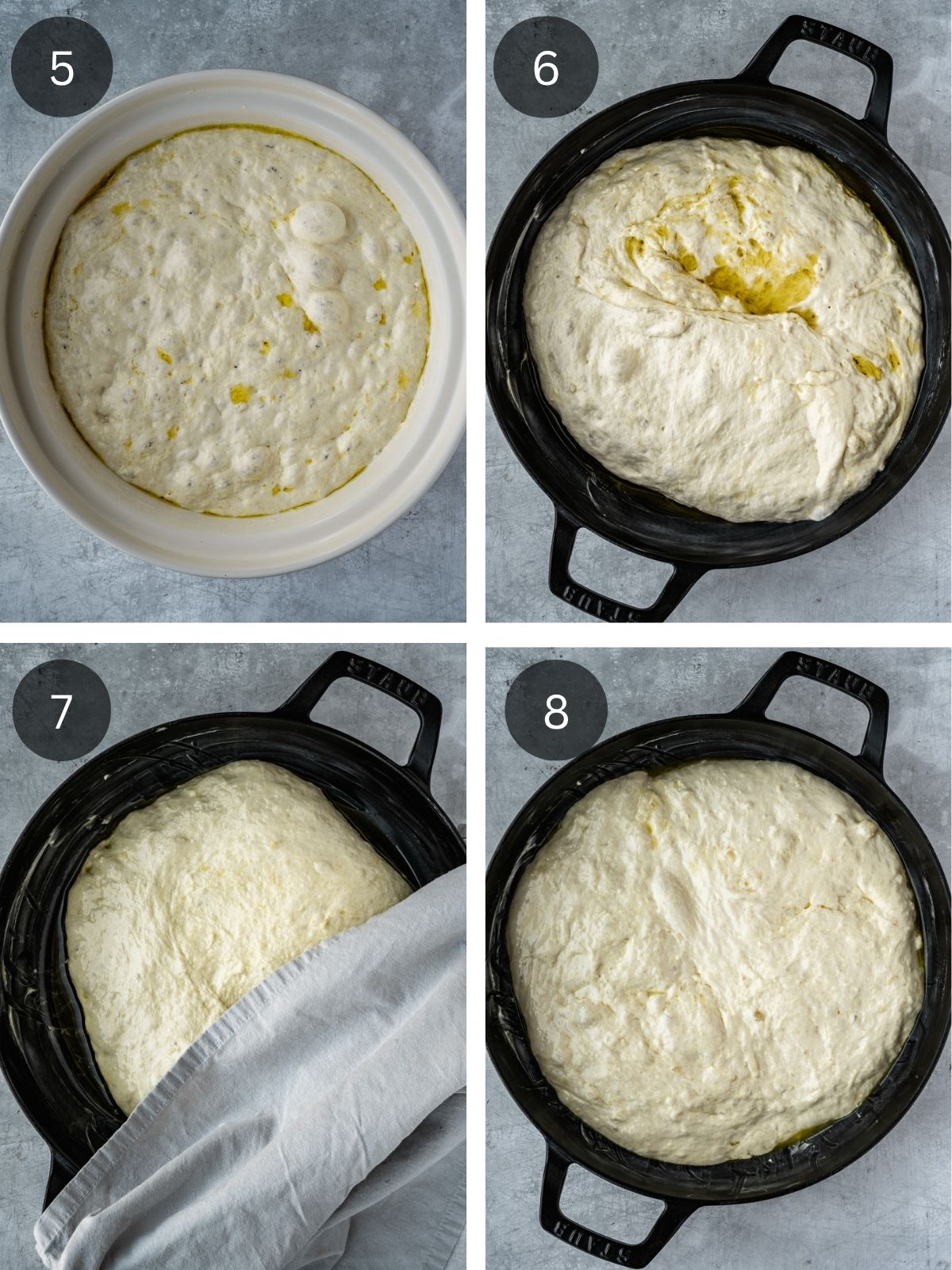
Step 5. Deflate and Shape. The next day, your focaccia dough should be bubbly and risen (Image 5). Transfer the dough into a well-buttered and oiled round baking dish or cast iron pan (Image 6). Carefully fold the dough over itself like a letter, turn 90 degrees, and repeat. Flip it so the seam is on the bottom. Use oiled hands if it sticks (Image 7).
Step 6. Rest. Cover with a tea towel and let it rest for 1.5 hours in a warm place. Let the dough spread naturally, then gently tease it to fill the baking dish evenly (Image 8). You can now preheat your oven to 450°F (230°C).
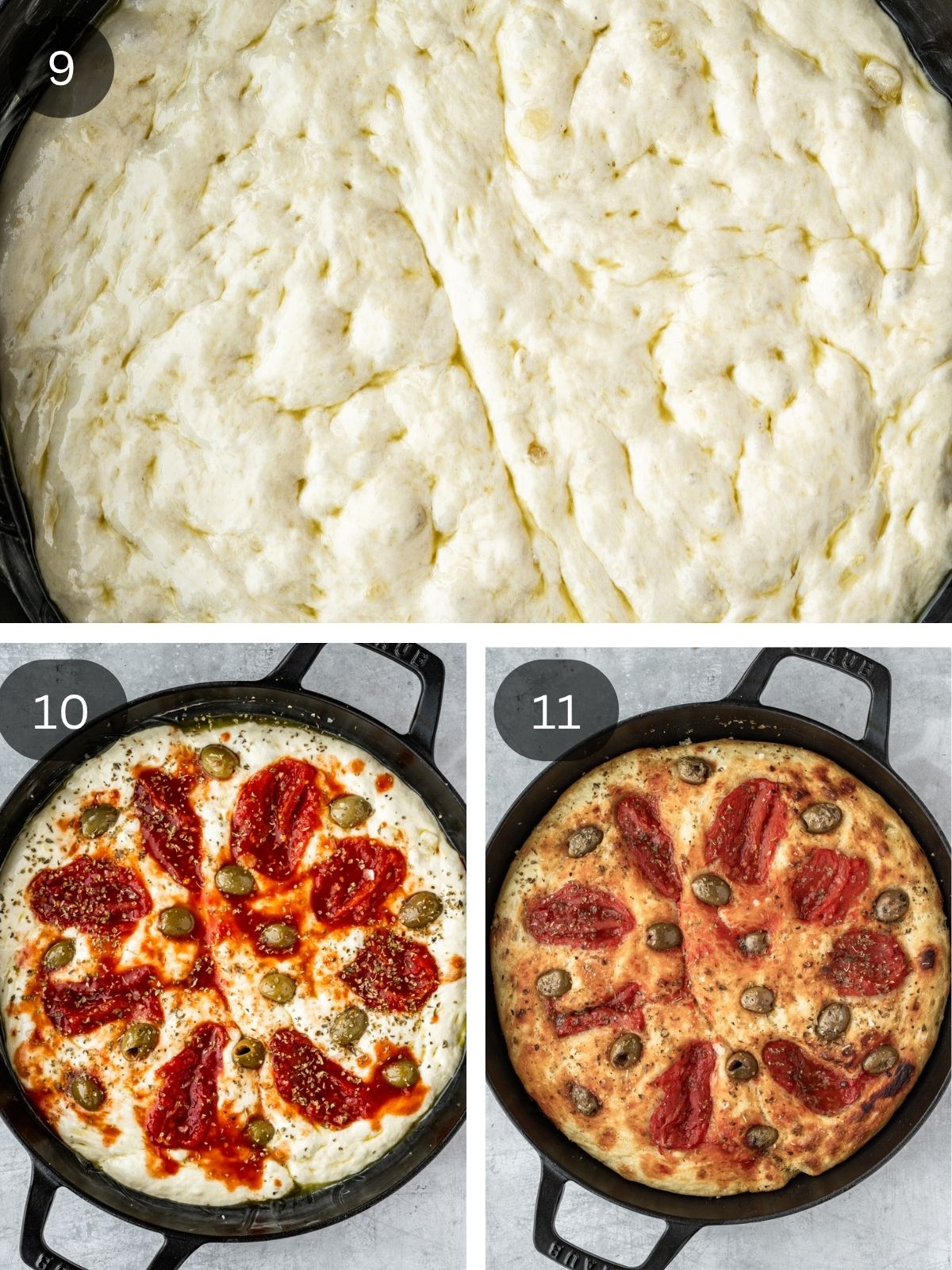
Step 7. Dimple and Dress. Drizzle with extra virgin olive oil, dimple all over with your fingers, and top with crushed tomatoes, olives, a sprinkle of oregano, and a pinch of flaky or coarse salt (Images 9-10).
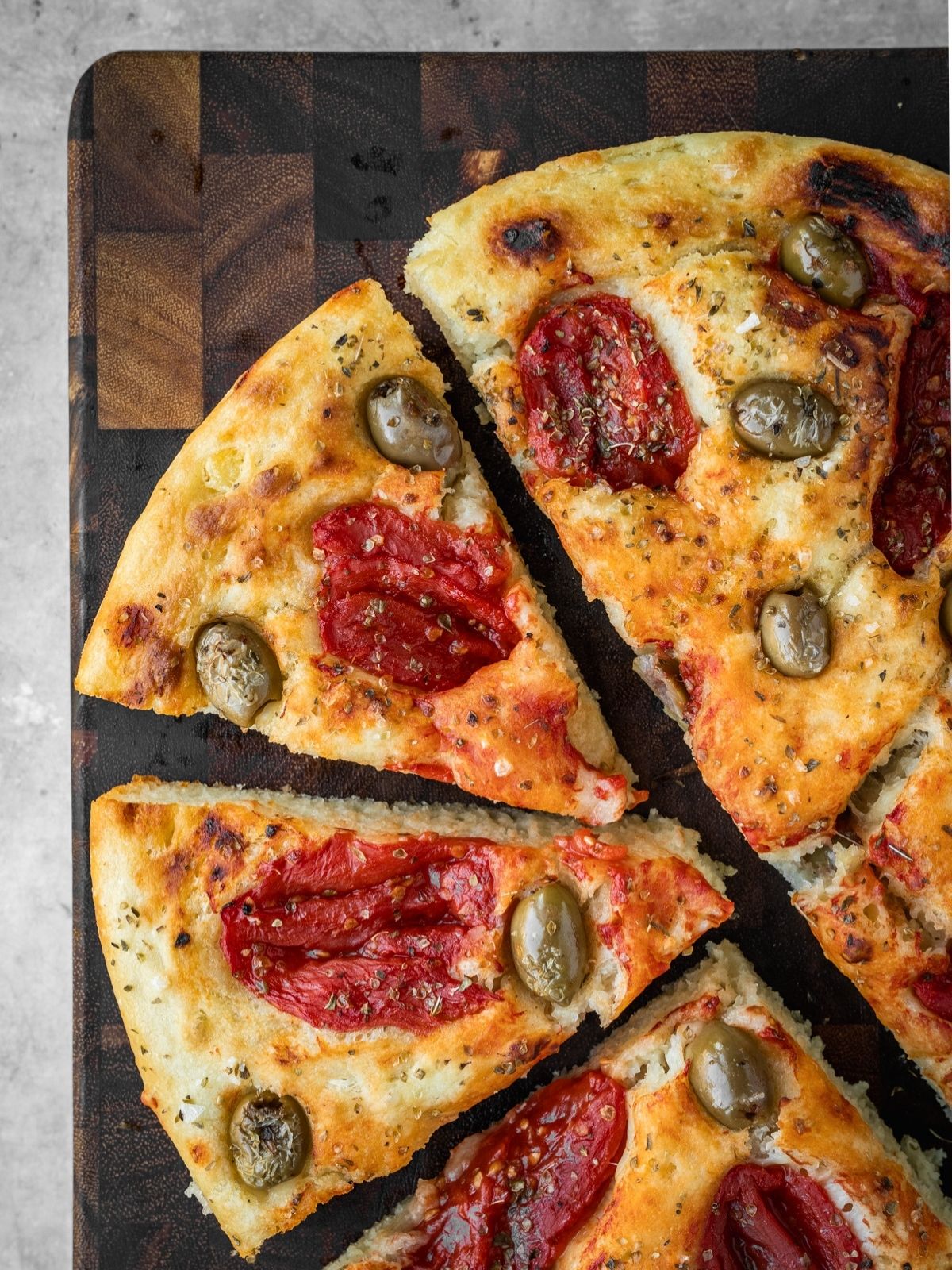
Step 8. Bake. Bake in a preheated oven for 20-25 minutes until golden brown (Image 11). Let it cool for about 30 minutes before slicing. Buon appetito!
Expert Tips
- Don’t skip the overnight ferment. It develops flavor and gives the dough an amazing texture.
- Metal is best. Use a metal pan or cast iron skillet for that crispy bottom. Avoid glass baking dishes at all costs! Your focaccia will stick! Worried it will stick anyway? Use parchment paper.
- BUTTER THE PAN! Ok, this might be my best focaccia baking tip to date. Before you oil the pan, butter it. The butter creates a layer between the pan and the dough, making it so incredibly easy to remove the bread from the pan once baked.
- Oiling your hands. Oiling your hands when shaping and dimpling prevents sticking and helps create that iconic focaccia crust.
Recipe FAQs
Yes! The dough rests overnight in the fridge, making it super convenient for entertaining. You can even let the dough rest in the fridge for up to 2 days.
Keep any leftover focaccia in an airtight container at room temperature for up to 2 days. Reheat in the oven or toaster oven to revive the texture.
Absolutely. Once baked and cooled, slice and freeze in a single layer. Reheat directly from frozen at 350°F (175°C) until warmed through.
Focaccia Barese is from the Puglia region of southern Italy, particularly the city of Bari. It dates back to ancient times, likely influenced by both Roman and Middle Eastern baking traditions, and was traditionally baked in wood-fired ovens while waiting for bread dough to rise. This version stands out for its use of semolina flour, mashed potato in the dough, and a topping of tomatoes and olives.
Other Baking Recipes
If you make this Focaccia Barese or any other baking recipes on Urban Farm and Kitchen, please take a moment to rate the recipe ⭐⭐⭐⭐⭐ and leave a comment below. It’s such a help to others who want to try the recipe.
For more Urban Farm and Kitchen, follow along on Instagram, Facebook, and Pinterest, visit the Urban Farm Shop, or subscribe for new posts via email.
How to Make Focaccia Barese (No-Knead Recipe)
Equipment
- Round metal or cast iron baking dish 12-14 inches in diameter
Ingredients
Base Ingredients
- 1 Yellow Potato (boiled, cooled and peeled) – about 200 grams
- 1½ cup Room temperature water – 350 grams
- 2¼ cups All purpose flour – 295 grams
- 1 cup Semolina flour – 130 grams
- 2 teaspoon Instant yeast – 7 grams
- 1½ teaspoon Kosher salt – 6 grams
- 1-2 tablespoon Extra virgin olive oil – For oiling the top of the dough
For the Baking Pan
- 1 teaspoon Butter
- 2 tablespoon Extra virgin olive oil – to be used to grease the pan
Toppings (use more or less to taste)
- 2 tablespoon Extra virgin olive oil – to oil the top of the focaccia
- 1 cup Tomatoes – whole canned tomatoes, halved ripe tomatoes or cherry tomatoes
- ½ cup Green pitted olives
- 1 teaspoon Dried oregano
- 1 teaspoon Flaky sea salt
Instructions
- Mix the liquid. In a large bowl, combine 1 Yellow Potato (boiled, cooled and peeled) and 1½ cup Room temperature water. Mash until the potato is fully dispersed into the water.
- Add the Dry Ingredients. Add the 2¼ cups All purpose flour, 1 cup Semolina flour, 2 teaspoon Instant yeast, and 1½ teaspoon Kosher salt to the bowl.
- Mix. Mix everything together using a fork, wooden spoon, or dough mixer until combined.
- Dough Rise. Drizzle with 1-2 tablespoon Extra virgin olive oil , cover the bowl with plastic wrap, and refrigerate for 18 hours.
- Deflate and Shape. The next day, your focaccia dough should be bubbly and risen. Transfer the dough into a well-buttered (1 teaspoon Butter) and oiled (2 tablespoon Extra virgin olive oil) round baking dish or cast iron pan. Carefully fold the dough over itself like a letter, turn 90 degrees, and repeat. Flip it so the seam is on the bottom. Use oiled hands if it sticks.
- Rest. Cover with a tea towel and let it rest for 1.5 hours in a warm place. Let the dough spread naturally, then gently tease it to fill the baking dish evenly.
- You can now preheat your oven to 450°F (230°C).
- Dimple and Dress. Drizzle with 2 tablespoon Extra virgin olive oil, dimple all over with your fingers, and top with 1 cup Tomatoes , ½ cup Green pitted olives, 1 teaspoon Dried oregano, and 1 teaspoon Flaky sea salt.
- Bake. Bake in a preheated oven for 20-25 minutes until golden brown. Let it cool for about 30 minutes before slicing.
Video
Notes
-
- All-Purpose Flour. You can use bread flour for a chewier texture. If you want to, you could switch some of the white flour out and replace it with whole wheat. Don’t switch out more than a quarter of the flour quantity.
-
- Semolina Flour. Semolina is traditional, but I know most people don’t necessarily keep it stocked. So if you don’t have it, and you’re not going to the store anytime soon, replace it with white or whole wheat flour instead.
-
- Potato: Traditionally, a boiled and mashed potato is incorporated into the dough. It adds softness. Use a yellow-fleshed Yukon gold type potato.
-
- Yeast: I like to use Instant yeast when making no knead bread, but dry active yeast will work just fine too. Just make sure to bloom it in the potato water for a few minutes before adding the flour.
Nutrition
Nutrition information is automatically calculated, so should only be used as an approximation.
 Like this recipe? Rate & comment below!








A thing of beauty and delicious. I liked that it was mostly hands free. It’s difficult to believe that something so easy could also be so amazing tasting.
So glad you enjoyed the recipe.