
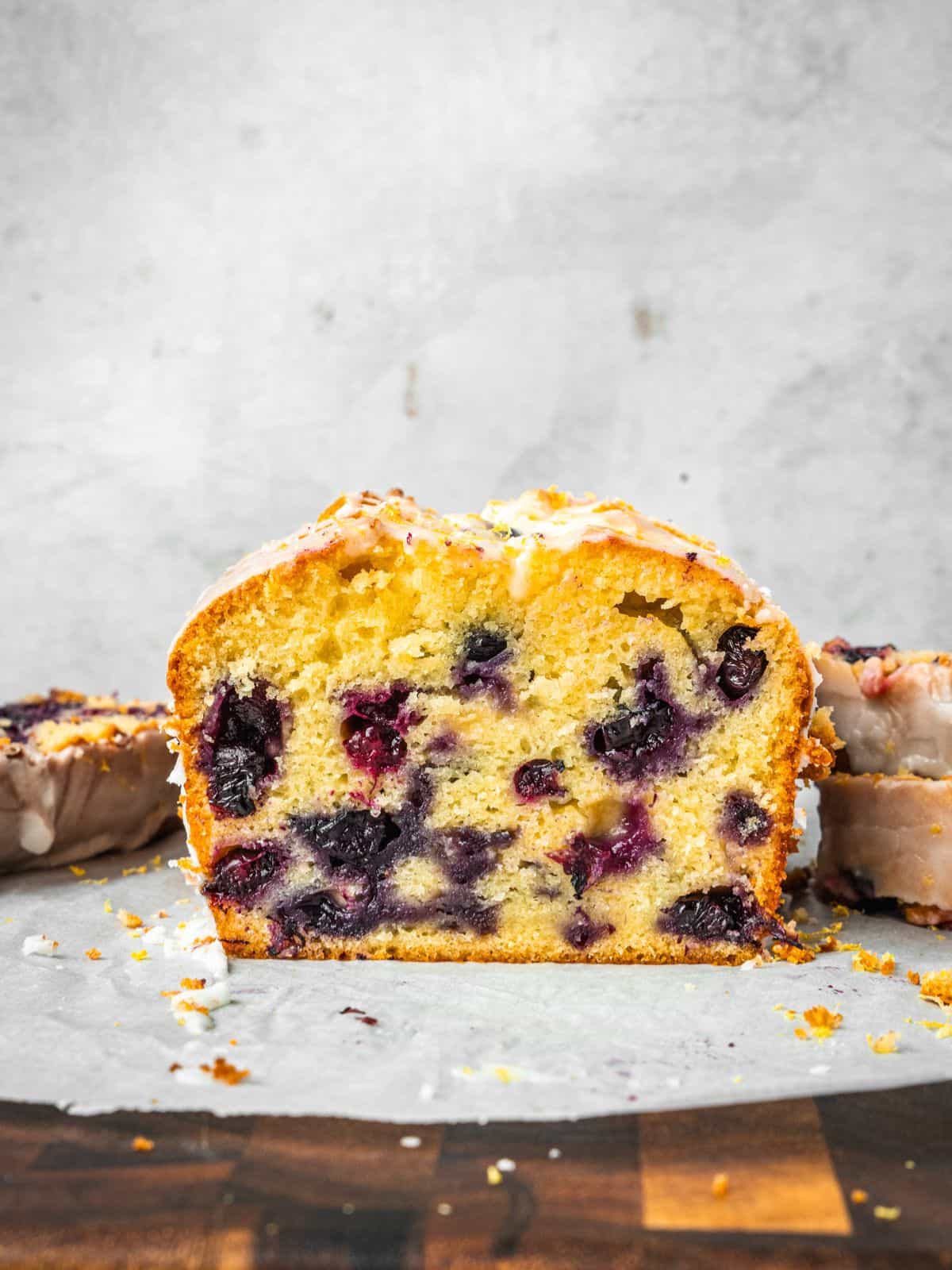
This Lemon Blueberry Loaf Recipe is bright, buttery, incredibly moist thanks to Greek yogurt, and packed with juicy blueberries in every slice. Finished with a simple lemon icing, it strikes the perfect balance between sweet and tangy.
Looking for more citrus flavor? Try my Pistachio Lemon Bars, Lemon Poppy Seed Muffins and Orange Blossom Sugar Cookies for more citrus-forward desserts.

Lemon Blueberry Loaf: Recipe at a Glance
Prep Time
20 mins
Cook Time
70 mins
Total Time
1 hr 30 mins
Servings
9 Slices
Calories*
375 kcal
Difficulty
Easy
Main Ingredients
Lemons, blueberries, all purpose flour, yogurt, sugar, icing sugar, baking powder, eggs, and butter.
Technique
Rubbing lemon zest into sugar, creaming butter, making a cake batter, baking a loaf, and mixing a simple icing.
*Calories are estimated
Table of Contents
Why This Recipe Works

- It’s easy to make. This quick bread recipe comes together with simple pantry ingredients and straightforward mixing techniques, making it perfect for bakers of any skill level.
- Perfect for spring and summer. Fresh lemon zest and juicy blueberries create a bright, seasonal loaf that feels right at home during warmer months. But you can totally make this year-round.
- Tested and Reliable: Groceries are expensive! All my Dessert Recipes are tested by me, my team and/or recipe testers before posting.
Ingredients
This recipe comes together with a handful of standard baking ingredients. Here is what you will need:
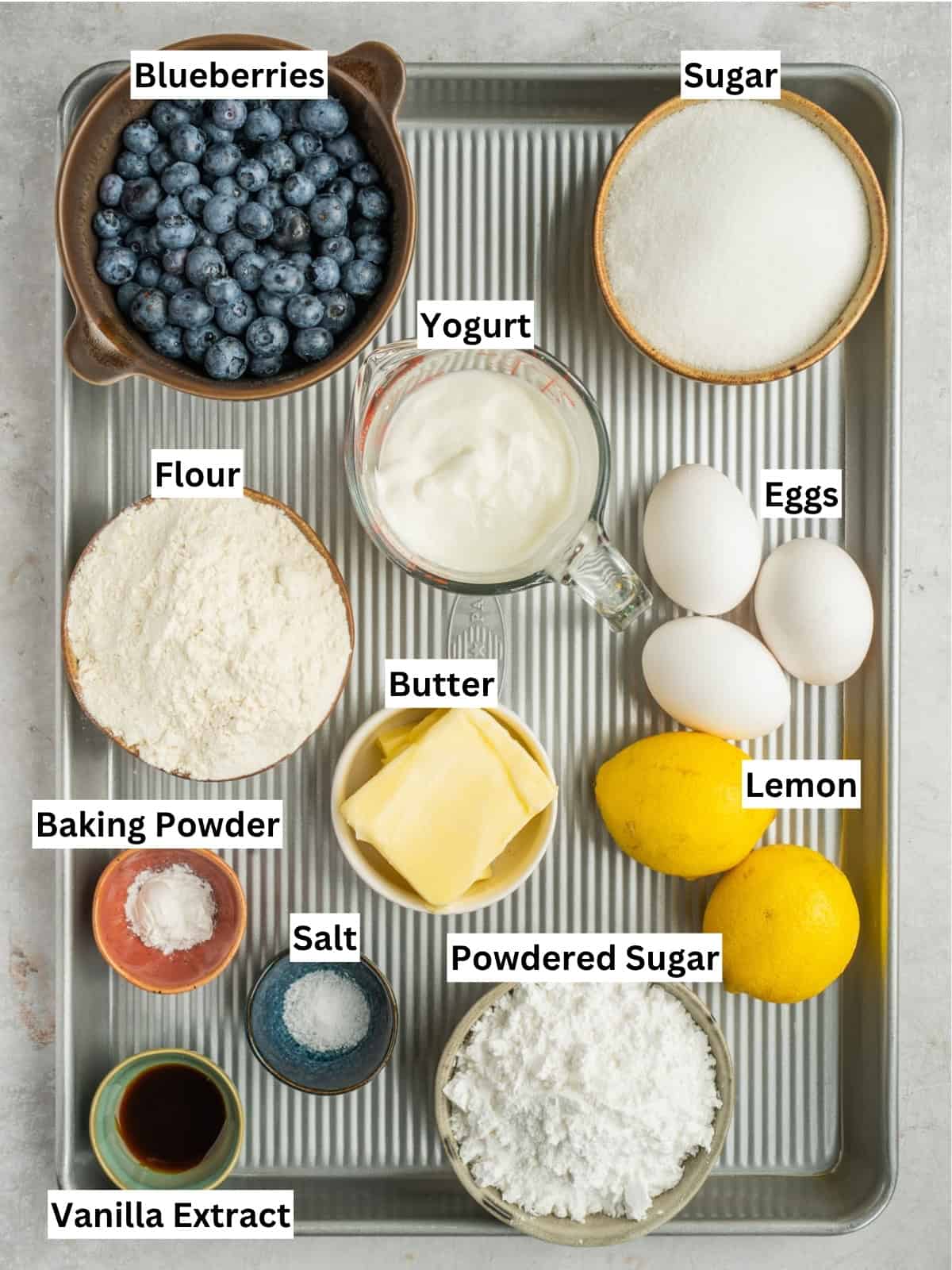
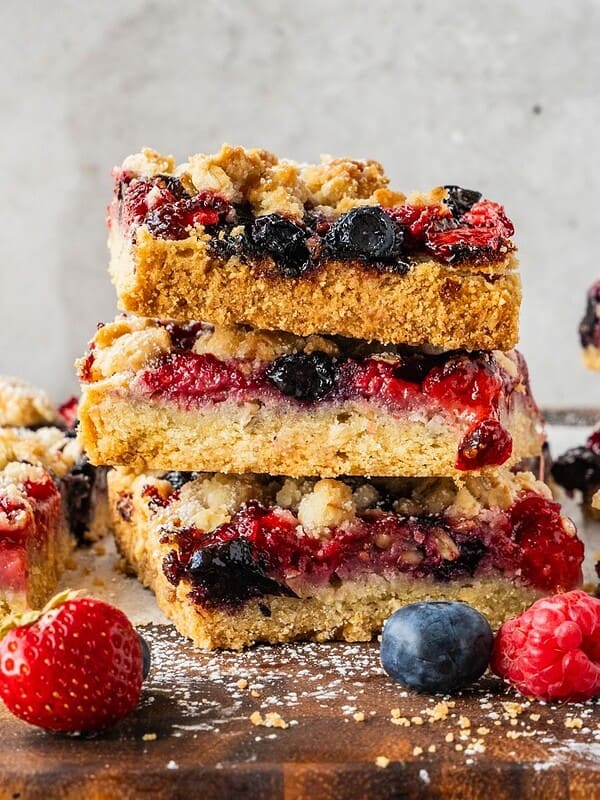
- Blueberries: Fresh blueberries are ideal, though frozen blueberries can also be used without thawing. Try to make this recipe during blueberry season, and make sure to try some of my other blueberry recipes: Blueberry Compote Recipe (with Maple Syrup), Triple Berry Bars with Oatmeal Shortcrust and Blueberry Peach Crisp.
- Sugar: You will need both granulated sugar and powdered sugar for this recipe. The powdered sugar is for the simple lemon glaze.
- Lemons: You will need both lemon zest (for the loaf batter) and lemon juice (for the icing). You can also make this recipe with lime. Lime and blueberries go well together, just like in my Blueberry Peach Galette (with Lime and Brown Sugar).
- Butter: Softened unsalted butter creates a rich, tender crumb. I recommend using unsalted, but if you only have salted butter, you can use it and omit the additional salt in the recipe.
- Greek Yogurt: Many pound cake and loaf recipes use sour cream, but I actually prefer using Greek Yogurt. It adds moisture (but not too much moisture) and a subtle tang while keeping the loaf soft for days. It’s what I use in my Pistachio Lemon Pound Cake (with Lemon Glaze). But if you only have sour cream, you can substitute it in equal parts.
Refer to the recipe card at the bottom of this post for a full list of ingredients and quantities.
How to Make This Lemon Blueberry Loaf Recipe
Step 1. Preheat Oven and Prepare Pan. Preheat your oven to 350°F. Line an 8½ x 4½-inch loaf pan with parchment paper.
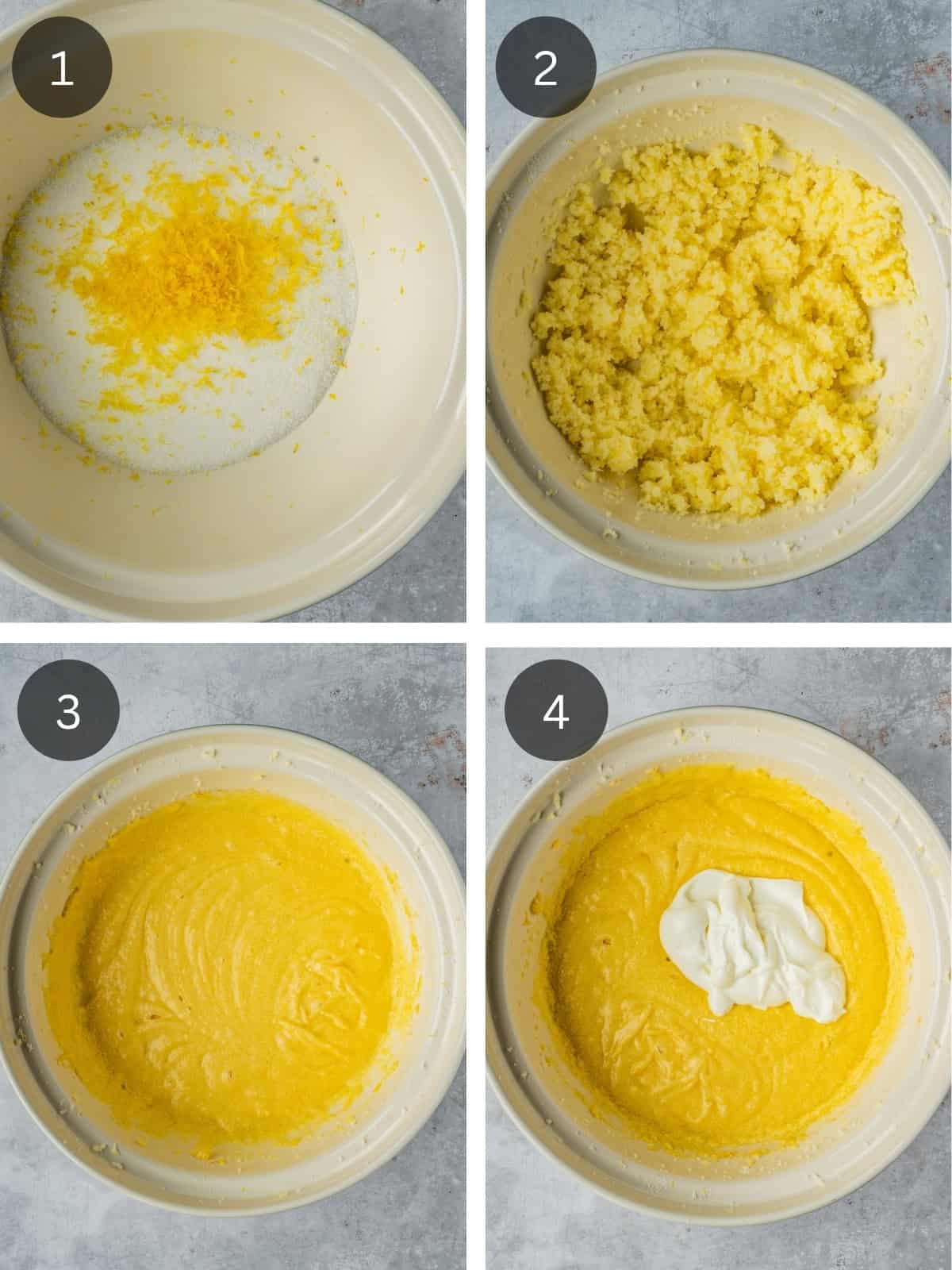
Step 2. Make Lemon Sugar. In a large mixing bowl, rub the sugar and lemon zest together with your fingertips until the sugar becomes fragrant and lightly yellow (Image 1).
Step 3. Add Butter. Add the softened butter and cream with a hand mixer until light and smooth (Image 2).
Step 4. Add Eggs and Vanilla. Beat in the vanilla extract, then add the eggs one at a time, mixing well after each addition (Image 3).
Step 5. Add Greek Yogurt. Gently gold the Greek yogurt into the cake batter using a spatula (Image 4).
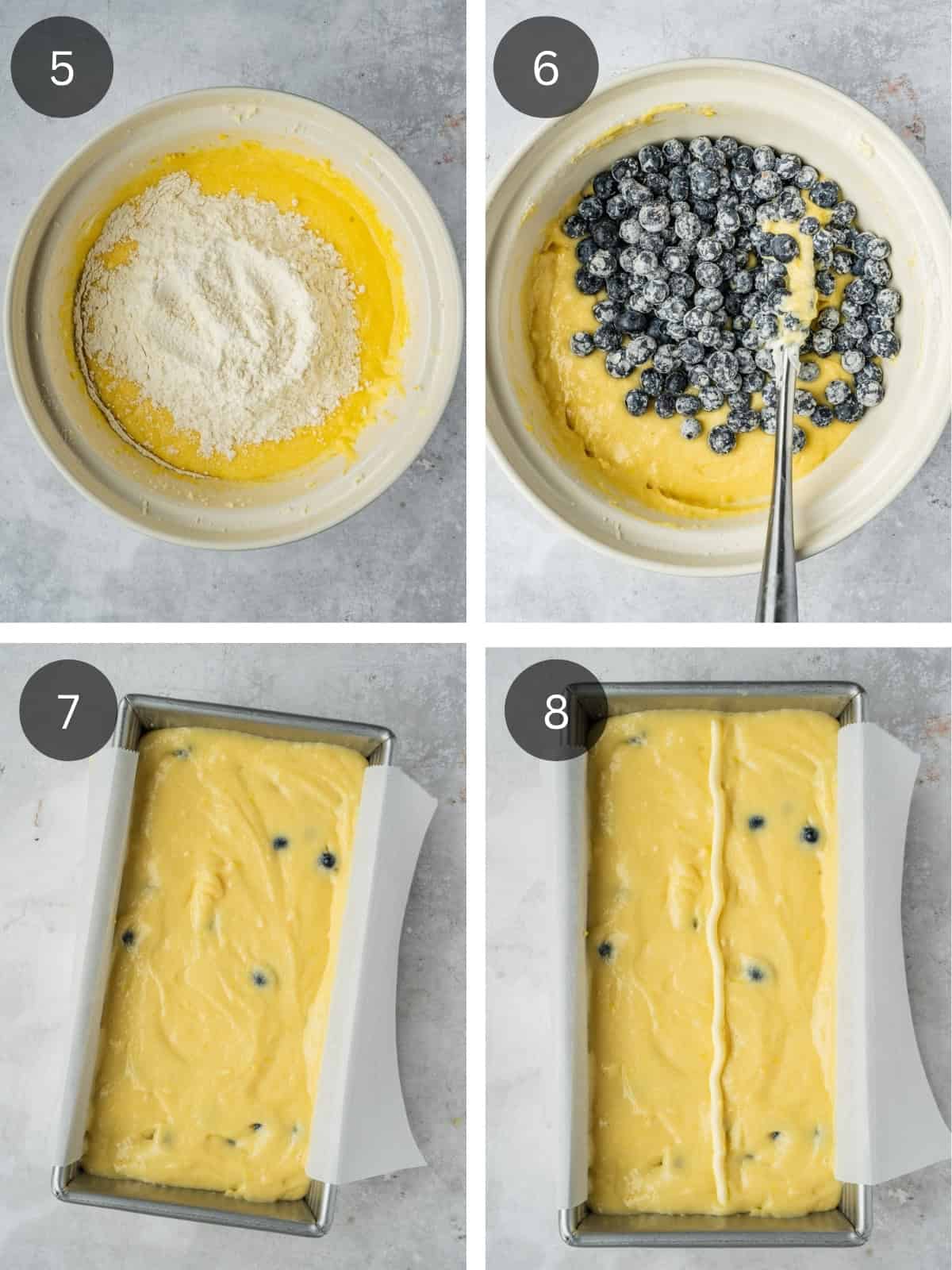
Step 6. Add Dry Ingredients. In a separate bowl, whisk together the all-purpose flour, salt, and baking powder. Fold the dry ingredients into the wet ingredients just until no dry streaks remain (Image 5).
Step 7. Add Blueberries. Toss the blueberries with a tablespoon of flour before gently folding them into the batter (Image 6).
Step 8. Transfer. Pour batter into the prepared loaf pan and smooth the top with an offset spatula (Image 7).
Step 9. Optional Butter. Piping an optional line of softened butter down the middle of the loaf helps it expand and give you that classic loaf top (Image 8). I learned this trick from my Friend Erin over at Cloudy Kitchen.

Step 10. Bake. Bake for 20 minutes at 350°F/175°C. Reduce the oven temperature to 325°F/165°F and continue baking for another 50–55 minutes, or until the loaf is golden brown and an instant-read thermometer inserted into the center reads about 205°F (Image 9). Remove from oven to cool for at least 1 hour on a wire rack.
Step 11. Make Icing. Meanwhile, whisk together the powdered sugar and fresh lemon juice until smooth (Image 10).
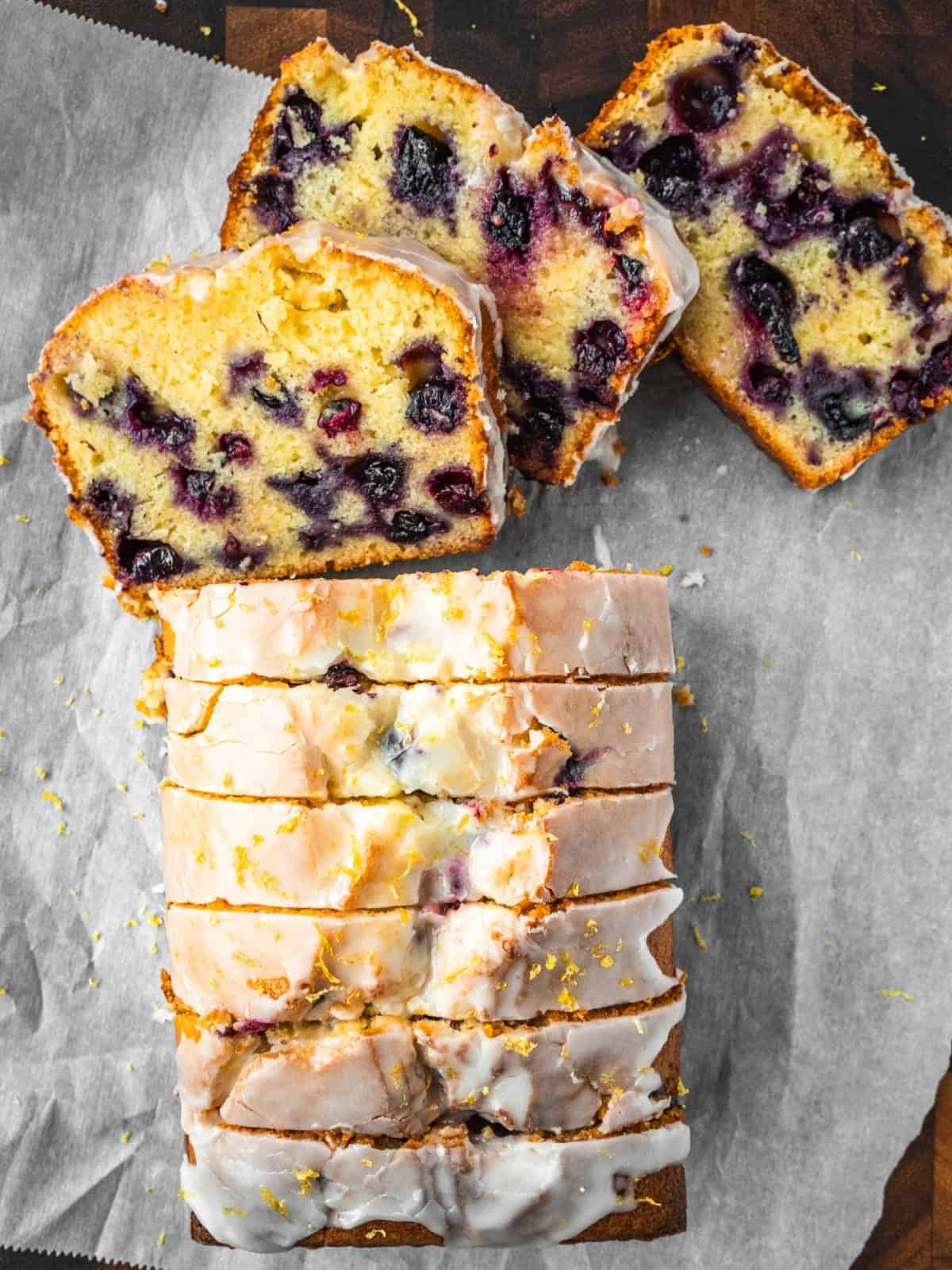
Step 12. Glaze. Once the loaf has cooled completely, drizzle the lemon icing over the top before slicing and serving (Images 11-12).
Troubleshooting and Testing Guide
After testing this recipe several times, these were the most common issues that came up. The good news? They’re all easy to avoid once you know what to look for.
My blueberries all sank to the bottom. What happened?
This usually comes down to batter consistency. A thicker batter is naturally better at suspending the fruit, which is why it’s important not to overwork the wet ingredients. Tossing the blueberries with a little flour also helps them grip the batter instead of sinking as the loaf bakes. During testing, I found that gently folding the berries in at the very end gave the most even distribution.
My loaf turned out dense instead of light.
The biggest culprit is overmixing after adding the flour. Once the dry ingredients are incorporated, continue mixing only until you no longer see dry streaks. Overmixing develops gluten, which creates a tighter crumb instead of the soft, tender texture you’re looking for in a quick bread.
Why is my loaf dry?
There are two common causes: too much flour or overbaking. If you’re measuring with cups, use the spoon-and-level method rather than scooping directly from the flour bag, which can easily pack in extra flour. I also recommend checking for doneness with an instant-read thermometer. The sweet spot for this loaf is around 205°F in the center, which consistently produced a moist crumb during recipe testing.
The center is still raw but the top looks done.
This is exactly why I start the loaf at 350°F before reducing the oven to 325°F. The initial higher temperature gives the loaf oven spring, while the lower temperature allows the center to finish baking without the exterior becoming too dark. If your loaf is browning faster than expected, loosely tent it with foil during the final 20–30 minutes of baking.
My loaf cracked down the middle. Is that normal?
Yes! A crack running along the top is actually a hallmark of a well-made quick bread. As the batter expands during oven spring, the surface naturally splits to release pressure. A nicely domed loaf with a center crack is exactly what I look for.
My loaf stuck to the pan.
Even with a non-stick loaf pan, I highly recommend lining it with parchment paper and leaving a bit of overhang on the long sides. It makes lifting the loaf out effortless and helps prevent the delicate edges from breaking while still warm. I also highly recommend using a metal loaf pan. Glass loaf pans are so problematic, and dangerous.
Expert Tips
- Rub the lemon zest into the sugar before mixing. This simple step releases the citrus oils and gives the loaf much more lemon flavor. I use the same technique in my Lemon Pistachio Pound Cake and Orange Blossom Sugar Cookies.
- Toss the blueberries with a little flour before folding them into the batter to help keep them suspended throughout the loaf.
- Fold the batter gently once the flour is added. Overmixing develops gluten and can make the loaf dense instead of tender.
- Bake low and slow after the initial 20 minutes. Lowering the oven temperature helps the center bake evenly without over-browning the exterior. Set a timer!
- Let the loaf cool completely before adding the icing so it stays on top instead of melting into the cake or falling over the edges.
- For even more lemon flavor, add a little extra fresh zest to the icing or sprinkle additional zest over the glaze after drizzling.
- If using frozen blueberries: add them straight from the freezer without thawing to reduce color bleeding into the batter.
- If measuring flour with cups, use the spoon-and-level method instead of scooping directly from the bag to avoid a dry, heavy loaf. Or better yet, use the weighted measurements I provided.
Lemon Blueberry Loaf Recipe FAQs
Absolutely. Bake it a day in advance and add the icing before serving, or glaze it once completely cooled.
Store the loaf in an airtight container at room temperature for up to 3 days or refrigerate for up to 1 week. I like to pre-slice it so that it’s easy to enjoy over the course of a few days. It will stay moist in an airtight container.
Yes. Freeze the loaf whole or in individual slices, preferably before adding the icing. Wrap tightly in plastic wrap followed by aluminum foil or a freezer-safe bag. Freeze for up to 3 months. Thaw overnight in the refrigerator and glaze before serving if desired.
Other Dessert Recipes



If you make this Lemon Blueberry Loaf or any other Dessert Recipe on Urban Farm and Kitchen, please take a moment to rate the recipe ⭐⭐⭐⭐⭐ and leave a comment below. It’s such a help to others who want to try the recipe.
For more Urban Farm and Kitchen, follow along on Instagram, Facebook, and Pinterest, visit the Urban Farm Shop, or subscribe for new posts via email.
Lemon Blueberry Loaf Recipe with Lemon Icing
Equipment
- 8.5×4.5inch loaf pan
Ingredients
For the Loaf
- 1¼ cup Sugar – 300 grams
- 2 tablespoon Lemon zest
- ½ cup Unsalted butter (softened) – 115 grams
- 1 tablespoon Vanilla extract
- 3 Large eggs – 150 grams
- ⅔ cup Greek yogurt – 165 grams
- 1½ cups All purpose flour – 185 grams
- ½ teaspoon Baking powder
- ¼ teaspoon Kosher salt
- 1½ cup Blueberries – 175 grams
For the Icing
- 1 cup Icing sugar (sifted) – 115 grams
- 2 tablespoon Lemon juice
Instructions
- Preheat Oven and Prepare Pan. Preheat your oven to 350°F. Line an 8½ x 4½-inch loaf pan with parchment paper.
- Make Lemon Sugar. In a large mixing bowl, rub the sugar and lemon zest together with your fingertips until the sugar becomes fragrant and lightly yellow.
- Add Butter. Add the softened butter and cream with a hand mixer until light and smooth.
- Add Eggs and Vanilla. Beat in the vanilla extract, then add the eggs one at a time, mixing well after each addition.
- Add Greek Yogurt. Gently gold the Greek yogurt into the cake batter using a spatula.
- Add Dry Ingredients. In a separate bowl, whisk together the all-purpose flour, baking powder and salt. Fold the dry ingredients into the wet ingredients just until no dry streaks remain.
- Add Blueberries. Toss the blueberries with a tablespoon of flour before gently folding them into the batter.
- Transfer. Pour batter into the prepared loaf pan and smooth the top with an offset spatula.
- Optional Butter. Piping an optional line of softened butter down the middle of the loaf helps it expand and give you that classic loaf top.
- Bake. Bake for 20 minutes at 350°F. Reduce the oven temperature to 325°F and continue baking for another 50–55 minutes, or until the loaf is golden brown and an instant-read thermometer inserted into the center reads about 205°F. Remove from oven to cool for at least 1 hour on a wire rack.
- Make Icing. Meanwhile, whisk together the powdered sugar and fresh lemon juice until smooth.
- Glaze. Once the loaf has cooled completely, drizzle the lemon icing over the top before slicing and serving.
Notes
- Blueberries: Fresh blueberries are ideal, though frozen blueberries can also be used without thawing.
- Sugar: You will need both granulated sugar and powdered sugar for this recipe. The powdered sugar is for the simple lemon glaze.
- Lemons: You will need both lemon zest (for the loaf batter) and lemon juice (for the icing). You can also make this recipe with lime.
- Butter: Softened unsalted butter creates a rich, tender crumb. I recommend using unsalted, but if you only have salted butter, you can use it and omit the additional salt in the recipe.
- Greek Yogurt: Many pound cake and loaf recipes use sour cream, but I actually prefer using Greek Yogurt. It adds moisture (but not too much moisture) and a subtle tang while keeping the loaf soft for days.
- Rub the lemon zest into the sugar before mixing. This simple step releases the citrus oils and gives the loaf much more lemon flavor.
- Toss the blueberries with a little flour before folding them into the batter to help keep them suspended throughout the loaf.
- Fold the batter gently once the flour is added. Overmixing develops gluten and can make the loaf dense instead of tender.
- Let the loaf cool completely before adding the icing so it stays on top instead of melting into the cake or falling over the edges.
Nutrition
Nutrition information is automatically calculated, so should only be used as an approximation.
 Like this recipe? Rate & comment below!









YUM! The lemon and blueberry was a match for the ages. I did add a bit of lemon extract to help it pack a punch, and it turned out tasting divine.
The only thing that didn’t go according to plan was the parchment paper – it seemed to hold in moisture and keep my loaves soggy at the bottom. But maybe my appliance didn’t heat up enough too? Or maybe I used the wrong kind of parchment paper? I’m not sure. Next time I’ll skip the paper and make sure my heat settings are correct.
Either way, they turned out so delicious that I didn’t even share like I usually do, and I hoarded all the slices for myself (I kept them in the fridge for about a week, and they still tasted and looked just fine!).
Thanks for this awesome recipe, Luay!
Thanks for the review, Jade. What you can do is let it cool for a bit, then carefully remove it from the pan and let it finish cooling on a wire rack. This will help it cool faster.
This recipe mentions adding cream but there is no cream in the ingredients
There is no cream in the recipe. The word “cream” refers to the process of mixing and whipped the butter and sugar together. It’s called creaming.
Just made this and wow, so tasty when it is still a little warm. Very easy to follow and ingredients that I often have on hand.
Thanks for coming back and leaving a review! Glad you liked the recipe.
hi luay! would you say this is pretty sweet or on the not too sweet side?
i’m hoping for a not too sweet and super lemony blueberry lemon cake!
It is sweet, but not overly sweet. You can skip the glaze to limit the amount of sweetness. but the glaze does give it more lemon flavor. Add more lemon zest to the cake if you want more lemony flavor.