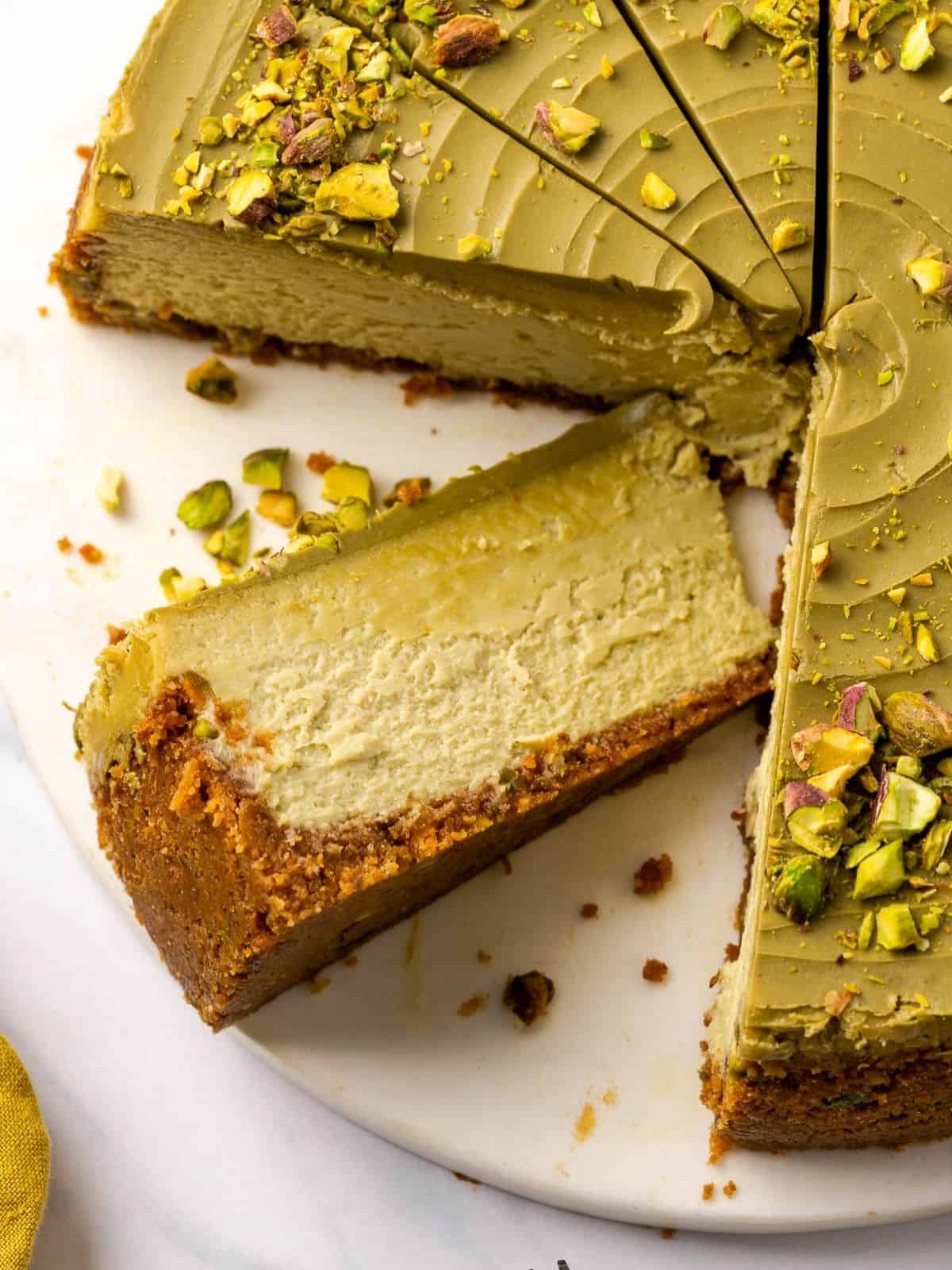
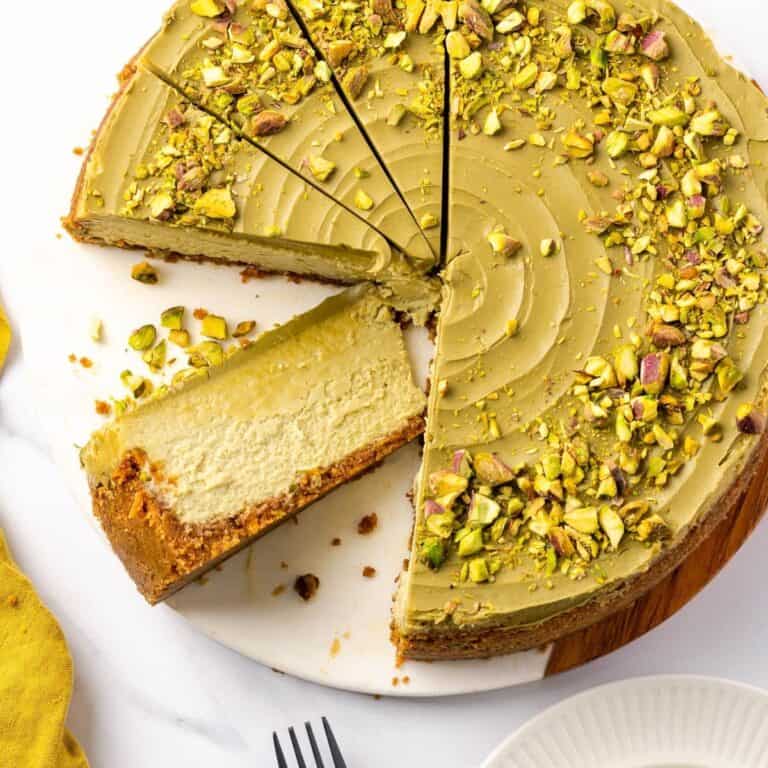
My Pistachio Cheesecake has a buttery graham cracker and pistachio crust, a creamy pistachio filling, and a silky pistachio topping. I bake it in a water bath and let it cool gradually for a smooth, rich cheesecake that’s worth planning ahead for. It’s a lovely dessert for a dinner party or brunch, and it’s easier to make than it looks.
Looking for more pistachio flavor? Try my Pistachio Lemon Bars and Pistachio Cranberry Scones.
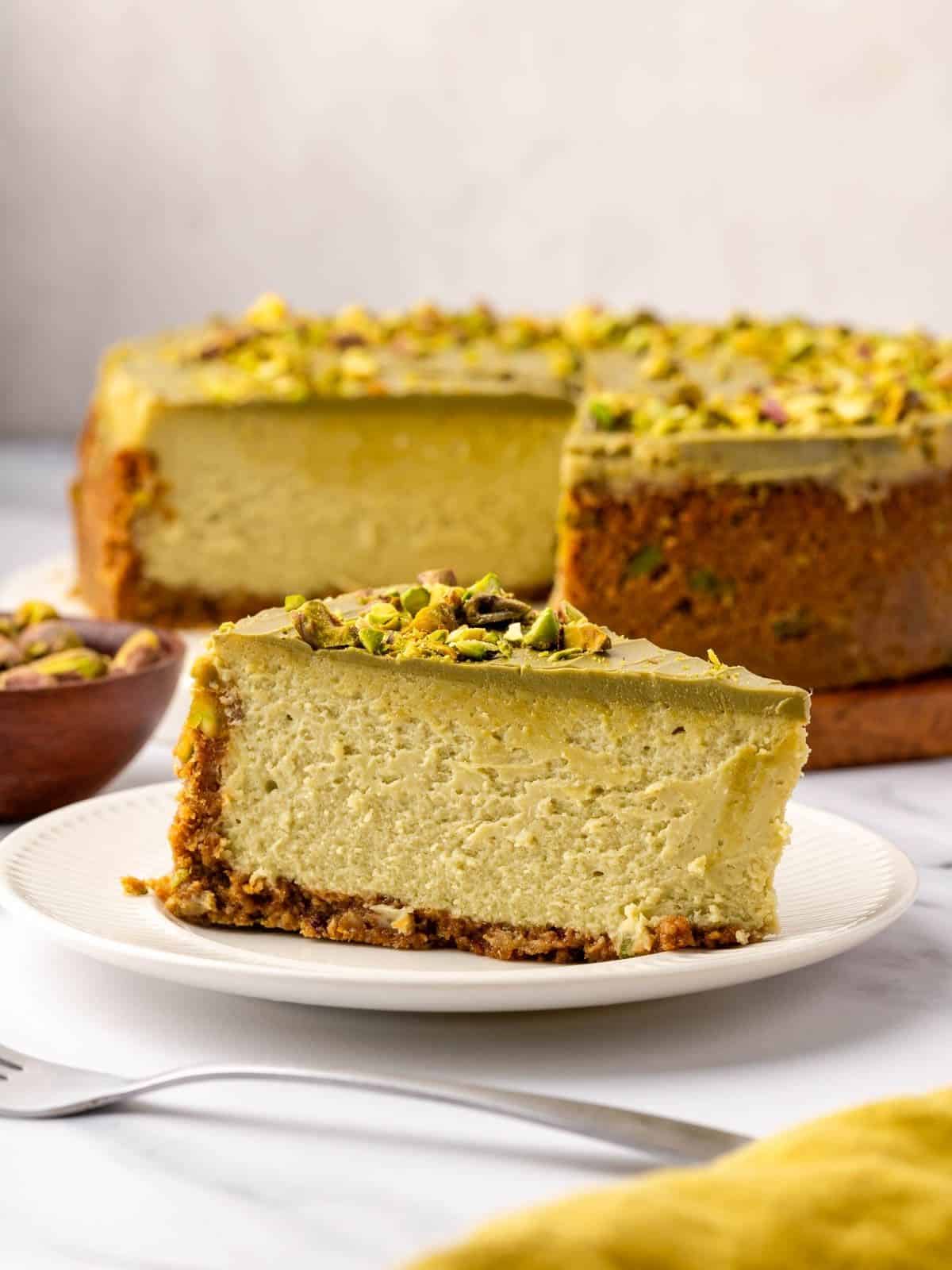
Pistachio Cheesecake: Recipe at a Glance
Prep + Chill Time
9 hrs 35 mins
Cook Time
1 hr 20 mins
Total Time
10 hrs 55 mins
Servings
12 Slices
Calories*
783 kcal
Difficulty
Moderate
Main Ingredients
Graham crackers, pistachios, butter, sugar, cream cheese, eggs, sour cream, pistachio cream, flour, vanilla and heavy cream.
Technique
Prepare and bake a graham cracker crust, mix a cream cheese cheesecake filling, bake the cheesecake in a hot water bath, then cool and decorate the chilled cheesecake.
*Calories are estimated
Table of Contents
Why My Recipe Works

- Easy to prepare ahead: The crust and filling come together with familiar ingredients, and the cheesecake chills in the refrigerator until you’re ready to serve it.
- Showstopper! Pistachio makes this cheesecake feel special for spring gatherings, holidays, and dinner parties throughout the year.
- Tested and reliable: Groceries are expensive! All my Dessert Recipes are tested by me, my team and/or recipe testers before posting.
Ingredients
This recipe comes together with some standard ingredients. The key here is the pistachio cream. Here’s what you will need:
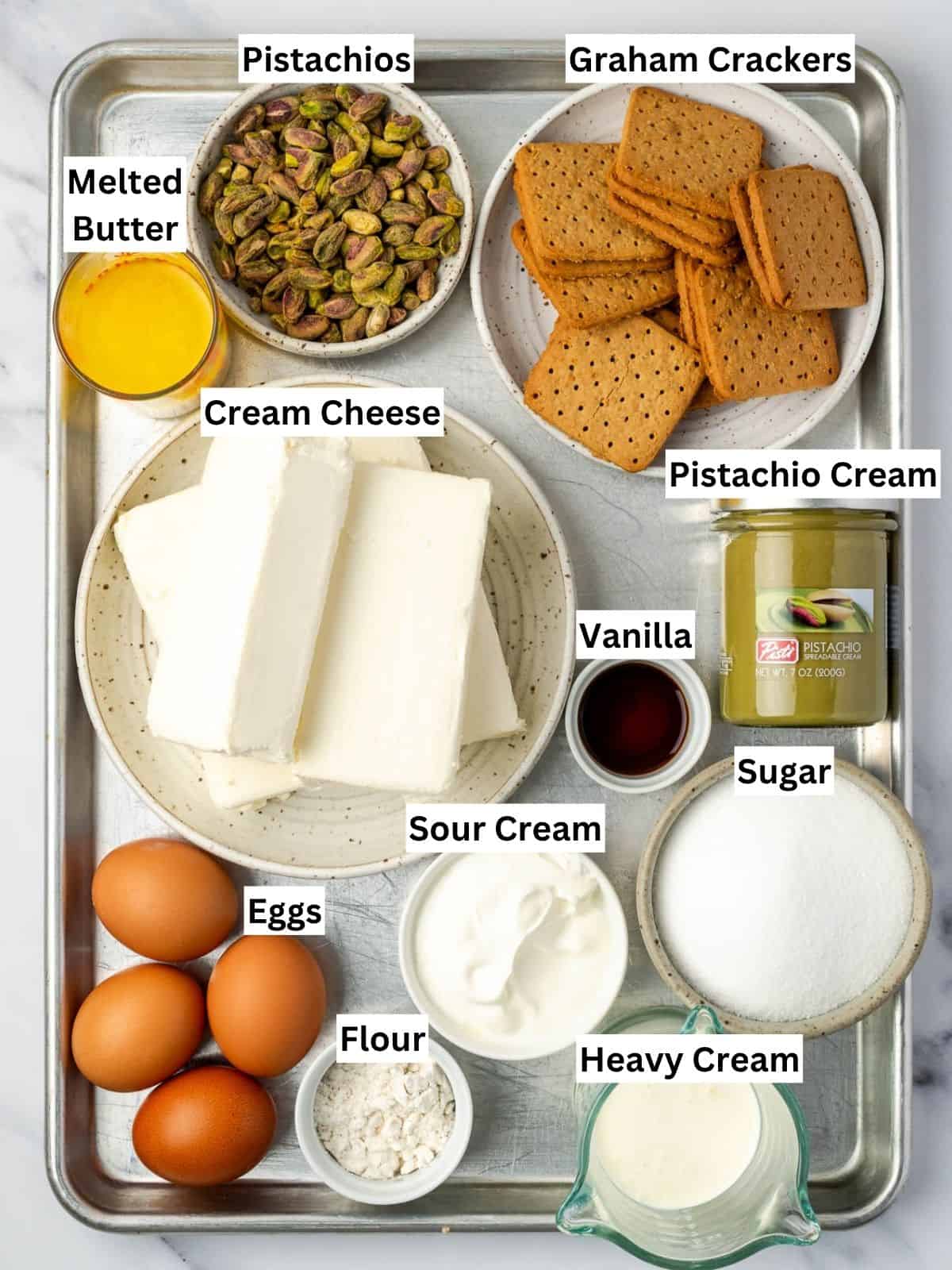
- Graham Crackers: They make a classic buttery crust. Store-bought crumbs work, or use digestive biscuits as a substitute.
- Pistachios: I highly recommend that you pulse them with the crackers for extra texture and a nutty flavor in the crust. Use unsalted, shelled pistachios. I am a big fan of pistachios and use them in quite a few of my desserts, so if you love them as much as I do, try my Lemon Curd Tart with Pistachios, Pistachio Lemon Bars, Lemon Pistachio Pound Cake and Pistachio Cranberry Scones.
- Cream Cheese: Use full-fat cream cheese from a block, softened to room temperature for a smooth filling. The key here is to let it come to room temperature. Depending on how cold your kitchen is, this can take an hour or more.
- Pistachio Cream: Sometimes called Pistachio Butter, Pistachio Paste or Pistachio Spread. Adds the signature nutty sweetness. You will find this spreadable product at most Italian or specialty stores these days, even at Costco. Usually, by the Nutella, jams, and other spreads. You can also use it in my Orange Pistachio Tiramisu.
- Sour Cream: It adds a slight tang and helps keep the filling creamy. Full-fat plain Greek yogurt can be used in its place.
- Vanilla Extract: I prefer the subtle flavor of vanilla here but if you have almond extract, and prefer a nuttier taste, give it a try.
Refer to the recipe card at the bottom of this post for a full list of ingredients and quantities.
How to Make This Creamy Pistachio Cheesecake Recipe
This is not a complex recipe, but I recommend that you read through all the steps before starting so you can understand what’s involved.
Preparing and Baking the Cheesecake
Step 1. Prepare the Pan and Set the Oven Temperature. Preheat the oven to 325°F (165°C). Set out a 9-inch springform pan. Bring about 8 cups of water to a boil for the water bath.
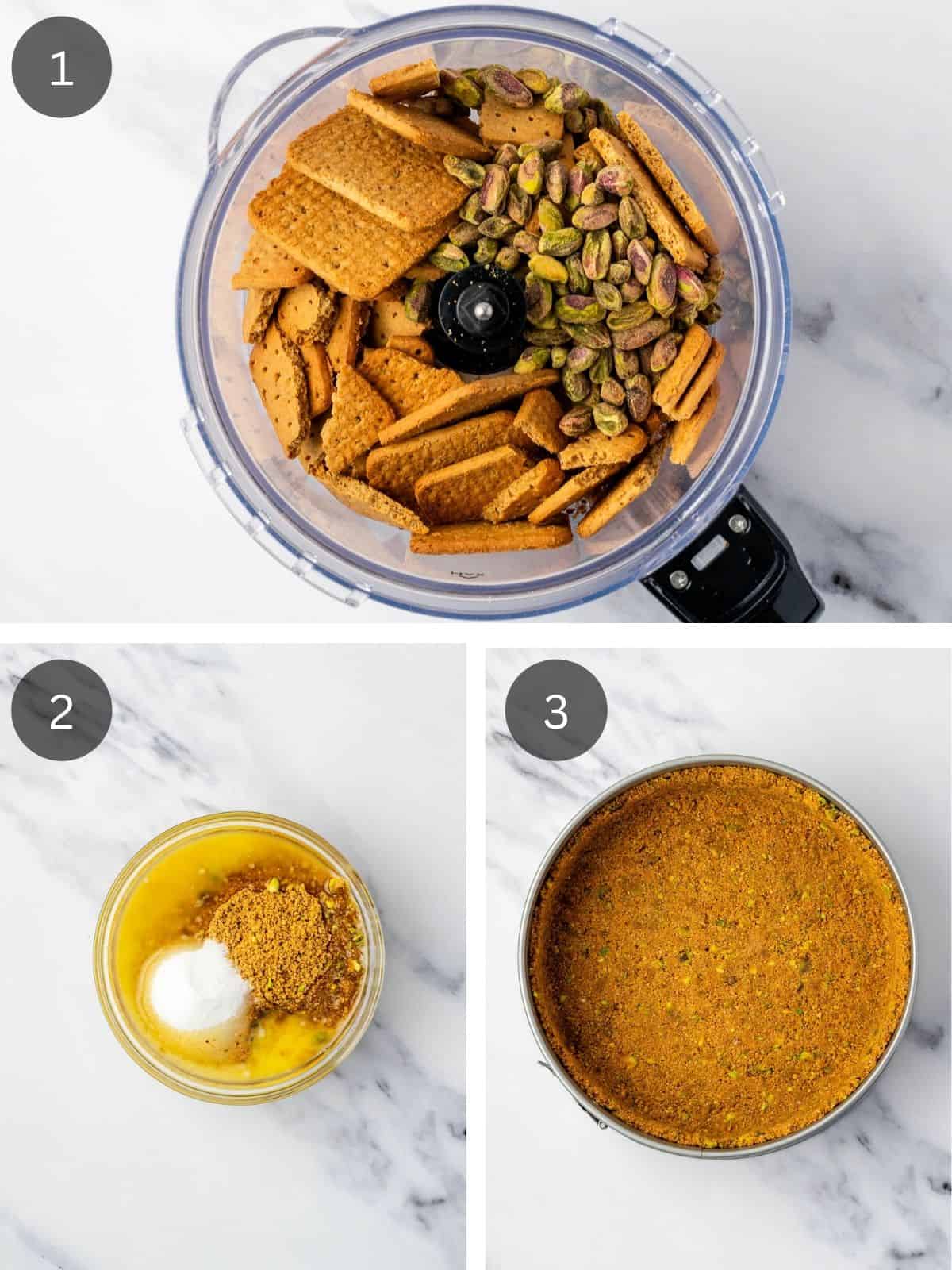
Step 2. Make the Graham Cracker Crust. Add the graham crackers and pistachios to a food processor (Image 1). Pulse until the crackers resemble sand, leaving some small pieces of pistachio visible. Transfer the mixture to a medium bowl and stir in the sugar and melted butter (Image 2).
Step 3. Press and Bake the Crust. Transfer the crumb mixture to the springform pan. Press it into an even layer on the bottom and up the sides, using the bottom of a flat glass or measuring cup. Bake for 10 minutes, then set aside (Image 3).
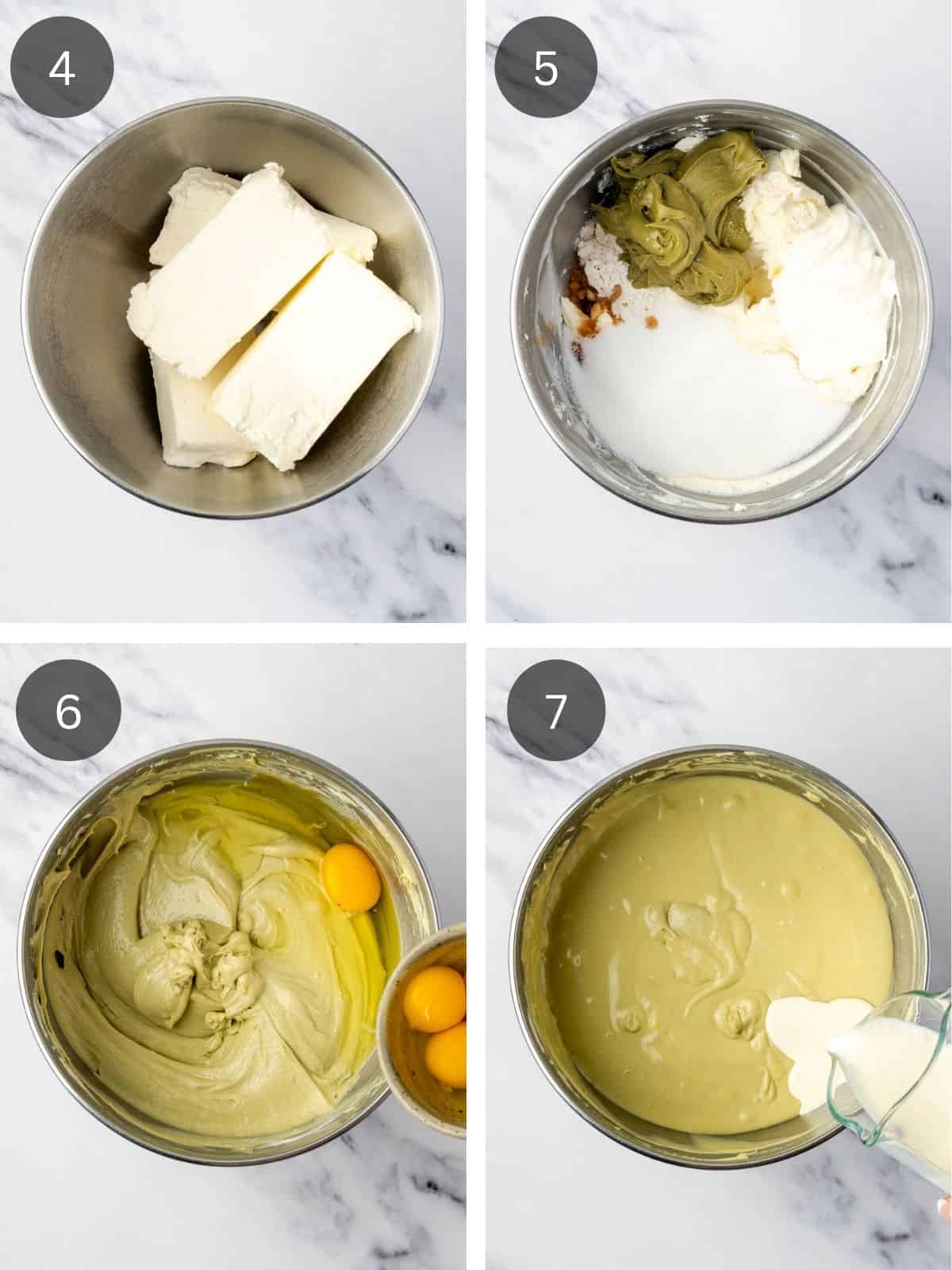
Step 4. Mix the Filling. Beat the cream cheese in the bowl of a stand mixer fitted with the paddle attachment for 3 to 4 minutes, until smooth. Scrape down the sides of the bowl. Add the sugar, pistachio cream, sour cream, flour, and vanilla extract (Images 4-5). Beat on medium speed for about 3 minutes, until combined.
Step 5. Add the Eggs and Cream. Turn the mixer to low speed and add the eggs one at a time (Image 6). Mix just until each egg is incorporated. Slowly pour in the heavy cream and mix just until combined (Image 7).
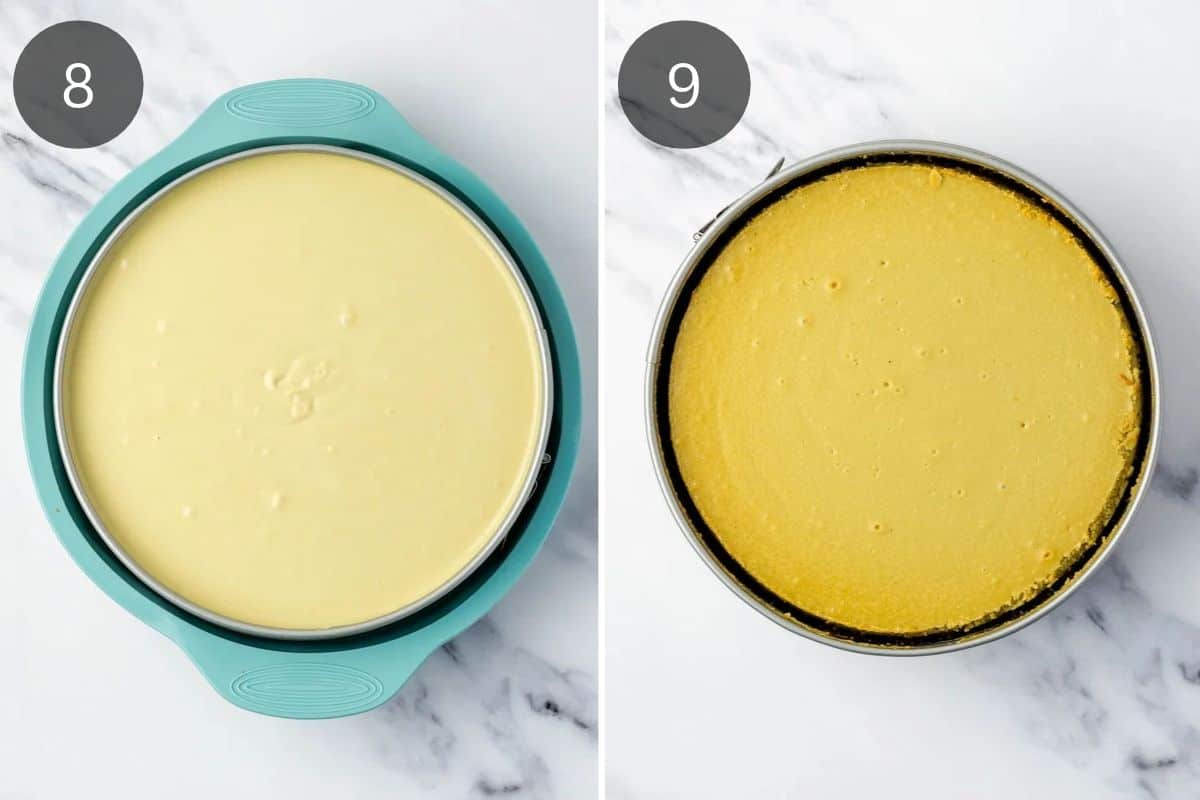
Step 6. Prepare the Water Bath. Wrap the outside of the springform pan in 2 to 3 layers of heavy-duty aluminum foil, or use a silicone springform pan cover. Pour in the cheesecake filling on the cooled crust (Image 8). Place the pan in a roasting dish. Then set the roasting dish on the middle rack of the oven. Carefully pour boiling water into the roasting dish until it’s about 1 inch deep.
Step 7. Bake the Cheesecake. Bake for 70 to 75 minutes. The outer 2 to 3 inches should look set, while the center should still jiggle when the pan is gently shaken (Image 9).
Cooling, Chilling and Decorating the Cheesecake
Step 8. Cool the Cheesecake Gradually. Turn off the oven and prop the door open with a wooden spoon. Leave the cheesecake in the oven for 1 hour. Remove the cheesecake from the oven and water bath. Carefully run a knife around the outside to release it from the pan, then cool it to room temperature on a wire rack.
Step 9. Chill. Refrigerate the cooled cheesecake for 8 hours or overnight before removing it from the pan.
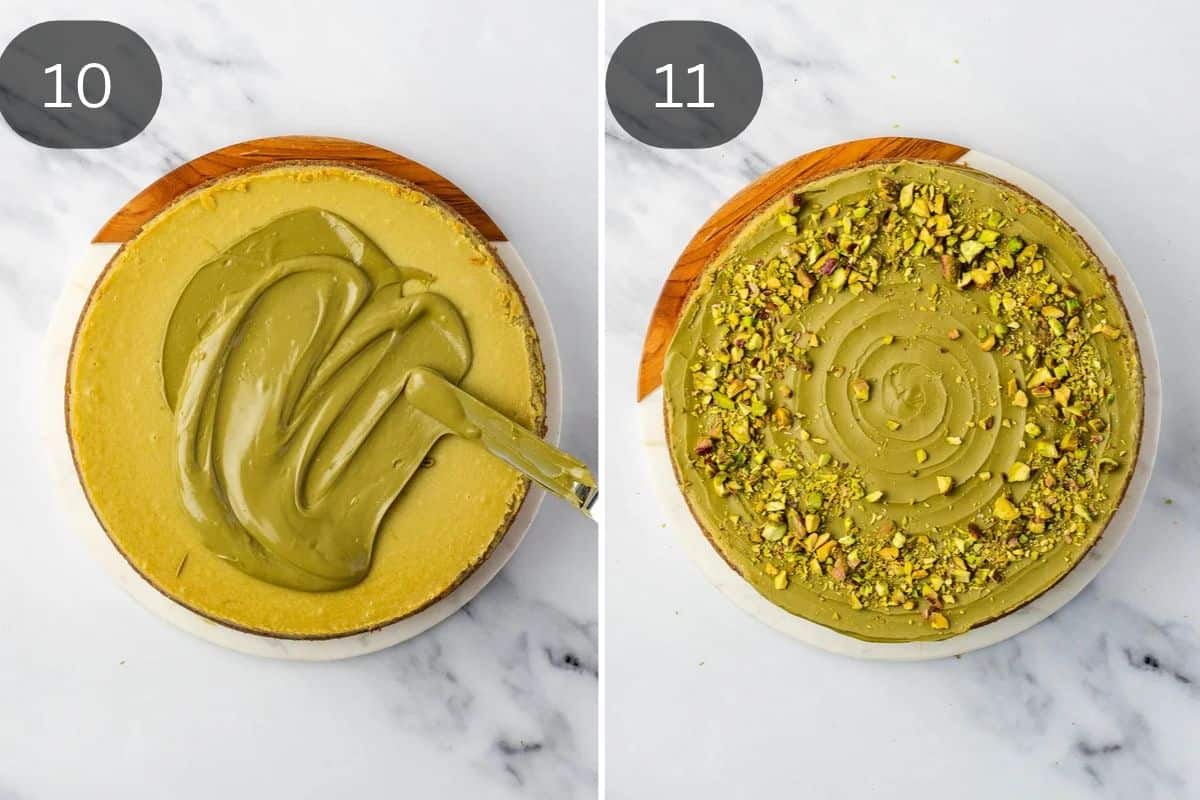
Step 10. Add the Topping. Remove the cheesecake from the pan and transfer it to a serving plate. Microwave the pistachio cream in a microwave-safe bowl for about 20 seconds, until it’s pourable. Spread it over the top of the cheesecake with an offset spatula and decorate with chopped pistachios, if using (Images 10-11). Refrigerate until ready to serve.
Expert Tips
- Bring the cold ingredients to room temperature. Softened cream cheese and room-temperature eggs, sour cream, and heavy cream blend more evenly, which helps prevent lumps.
- Don’t overmix after adding the eggs. Mixing on low and stopping as soon as they’re incorporated helps avoid adding too much air to the batter.
- No stand mixer? No problem. You can make the filling using a large mixing bowl and hand mixer.
- Wrap the pan carefully. A snug foil wrap or silicone liner helps keep water from seeping into the springform pan during baking. Testing Note: I’ve made cheesecakes with both methods, and I’ve started to exclusively use the silicone liner (affiliate link). It’s easier to clean and less wasteful. I highly recommend it.
- Use the jiggle test. The edges should look set, while the center should wobble gently. It will continue to set as it cools and chills.
- Cool it slowly. Leaving the cheesecake in the turned-off oven for an hour helps it cool more gradually.
- Allow enough time to chill. The recipe details list 4 hours or more of chilling, but the method calls for 8 hours or overnight. For the firmest texture and cleanest slices, follow the method and chill it overnight.
- Other Topping Idea: whipped cream would work nicely here too.
Troubleshooting
Why did my cheesecake crack?
Cheesecake can crack if it’s overbaked, cools too quickly, or has too much air incorporated into the batter. Mix gently after adding the eggs, use the water bath, and let the cheesecake cool in the turned-off oven before moving it to the counter. A small crack won’t affect the flavor, and the pistachio topping can cover it.
Why is my filling lumpy?
Based on my experience, cold cream cheese is a common cause. Let it soften at room temperature and beat it until smooth before adding the other filling ingredients. Scrape down the bowl so no pieces are left on the sides.
Why is my crust soggy?
Water may have leaked into the springform pan during the water bath. Wrap the pan in 2 to 3 layers of heavy-duty foil, making sure the layers cover the seams, or use a silicone springform cover.
Pistachio Cheesecake Recipe FAQs
Yes. This cheesecake needs several hours to chill, so it’s a good dessert to make the day before serving. Keep it covered in the refrigerator and add the pistachio topping before serving, or after chilling if you prefer.
Cover the cheesecake or store slices in an airtight container in the refrigerator for up to 4 days.
Yes. Freeze it whole or in slices, preferably before adding the topping. Wrap it tightly in plastic wrap and then foil, or place the wrapped pieces in a freezer-safe container. Thaw overnight in the refrigerator and add the topping before serving.
Chill the cheesecake thoroughly. Use a long, sharp knife warmed under hot water and wiped dry between cuts.
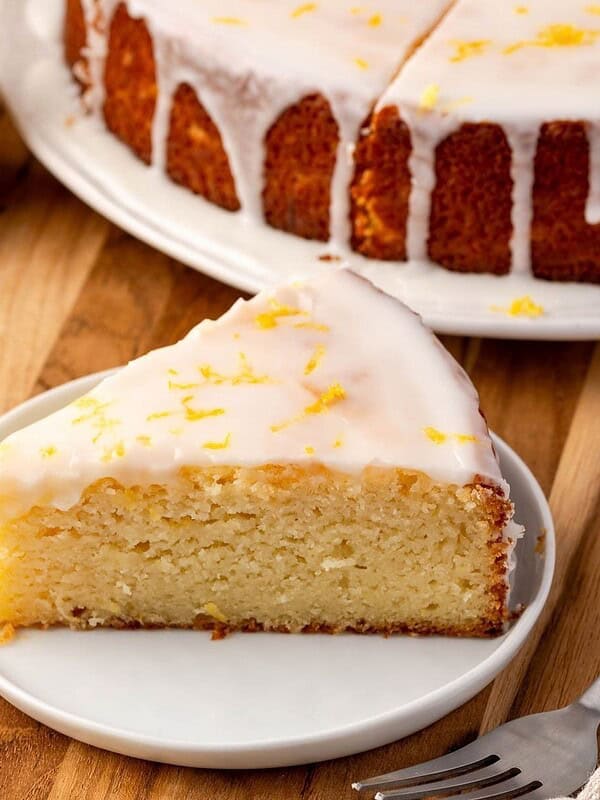
Other Dessert Recipes
If you make this Pistachio Cheesecake or any other Dessert Recipe on Urban Farm and Kitchen, please take a moment to rate the recipe ⭐⭐⭐⭐⭐ and leave a comment below. It’s such a help to others who want to try the recipe.
For more Urban Farm and Kitchen, follow along on Instagram, Facebook, and Pinterest, visit the Urban Farm Shop, or subscribe for new posts via email.
Pistachio Cheesecake with Graham Cracker Pistachio Crust
Equipment
- Stand Mixer – Or bowl and hand mixer
- Silicone Liner – Optional
Ingredients
For the Crust
- 1 ¾ cups Graham crackers (or store bought crumbs) – 210 grams
- ½ cup Pistachios (unsalted and shelled) – 70 grams
- 3 tablespoon Sugar – 38 grams
- 6 tablespoon Unsalted butter (melted) – 85 grams
For the Cheesecake
- 2 lbs Cream cheese (room temperature) – 904 grams
- 1 ¼ cup Sugar – 250 grams
- 1 cup Pistachio cream – 240 grams
- ½ cup Sour cream (room temperature) – 120 grams
- 2 tablespoon All-Purpose Flour – 16 grams
- 1 teaspoon Vanilla Extract
- 4 large eggs (room temperature) – about 200 grams
- ½ cup Heavy cream (room temperature) – 112 grams
Topping
- ½ cup Pistachio cream – 120 grams
- 3 tablespoon Chopped pistachios –
26 grams
Instructions
- Prepare the Pan and Set the Oven Temperature. Preheat the oven to 325°F (165°C). Set out a 9-inch springform pan. Bring about 8 cups of water to a boil for the water bath.
- Make the Graham Cracker Crust. Add the graham crackers and pistachios to a food processor. Pulse until the crackers resemble sand, leaving some small pieces of pistachio visible. Transfer the mixture to a medium bowl and stir in the sugar and melted butter.
- Press and Bake the Crust. Transfer the crumb mixture to the springform pan. Press it into an even layer on the bottom and up the sides, using the bottom of a flat glass or measuring cup. Bake for 10 minutes, then set aside.
- Mix the Filling. Beat the cream cheese in the bowl of a stand mixer fitted with the paddle attachment for 3 to 4 minutes, until smooth. Scrape down the sides of the bowl. Add the sugar, pistachio cream, sour cream, flour, and vanilla extract. Beat on medium speed for about 3 minutes, until combined.
- Add the Eggs and Cream. Turn the mixer to low speed and add the eggs one at a time (Image 6). Mix just until each egg is incorporated. Slowly pour in the heavy cream and mix just until combined.
- Prepare the Water Bath. Wrap the outside of the springform pan in 2 to 3 layers of heavy-duty aluminum foil, or use a silicone springform pan cover. Pour in the cheesecake filling on the cooled crust. Place the pan in a roasting dish. Then set the roasting dish on the middle rack of the oven. Carefully pour boiling water into the roasting dish until it’s about 1 inch deep.
- Bake. Bake for 70 to 75 minutes. The outer 2 to 3 inches should look set, while the center should still jiggle when the pan is gently shaken.
- Cool the Cheesecake Gradually. Turn off the oven and prop the door open with a wooden spoon. Leave the cheesecake in the oven for 1 hour. Remove the cheesecake from the oven and water bath. Carefully run a knife around the outside to release it from the pan, then cool it to room temperature on a wire rack.
- Chill. Refrigerate the cooled cheesecake for 8 hours or overnight before removing it from the pan.
- Add the Topping. Remove the cheesecake from the pan and transfer it to a serving plate. Microwave the pistachio cream in a microwave-safe bowl for about 20 seconds, until it’s pourable. Spread it over the top of the cheesecake with an offset spatula and decorate with chopped pistachios, if using. Refrigerate until ready to serve.
Notes
- Pistachios: I highly recommend that you pulse them with the crackers for extra texture and a nutty flavor in the crust. Use unsalted, shelled pistachios.
- Pistachio Cream: Sometimes called Pistachio Butter, Pistachio Paste or Pistachio Spread. Adds the signature nutty sweetness. You will find this spreadable product at most Italian or specialty stores these days, even at Costco. Usually, by the Nutella, jams, and other spreads.
- Bring the cold ingredients to room temperature. Softened cream cheese and room-temperature eggs, sour cream, and heavy cream blend more evenly, which helps prevent lumps.
- Don’t overmix after adding the eggs. Mixing on low and stopping as soon as they’re incorporated helps avoid adding too much air to the batter.
- Wrap the pan carefully. A snug foil wrap or silicone liner helps keep water from seeping into the springform pan during baking. Testing Note: I’ve made cheesecakes with both methods, and I’ve started to exclusively use the silicone liner (affiliate link). It’s easier to clean and less wasteful. I highly recommend it.
- Use the jiggle test. The edges should look set, while the center should wobble gently. It will continue to set as it cools and chills.
- Cool it slowly. Leaving the cheesecake in the turned-off oven for an hour helps it cool more gradually.
Nutrition
Nutrition information is automatically calculated, so should only be used as an approximation.
 Like this recipe? Rate & comment below!