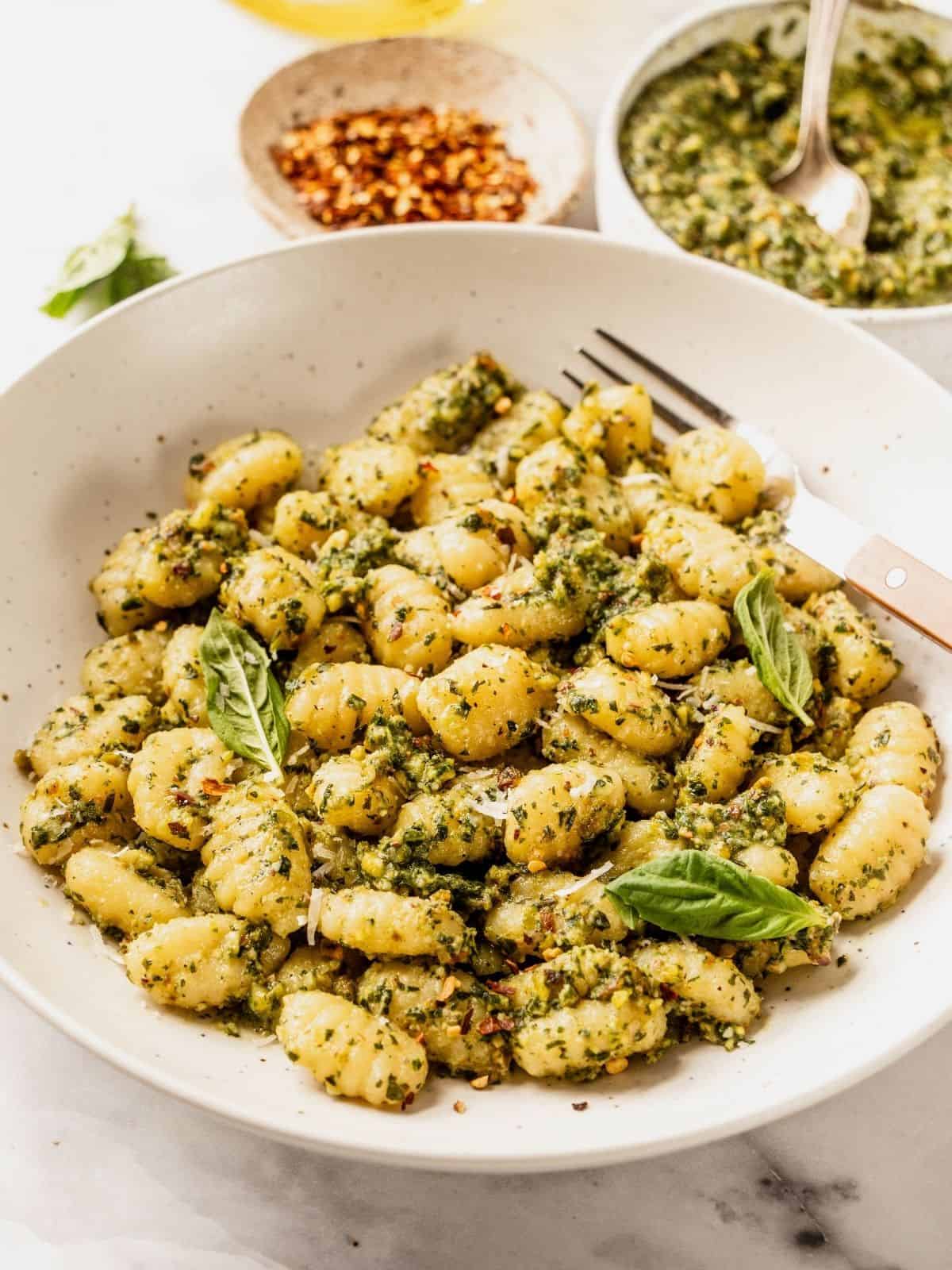
My Mint and Basil Pistachio Pesto recipe is a fresh and slightly sweet take on the classic basil pesto. And it comes together in under 10 minutes. Toss it with pasta for an easy weeknight meal, slather it on bruschetta, add it to a cheese board, or fold it into a salad dressing.
I love making pesto recipes in the spring and summer months and have a few other recipes you can try, including my Arugula Pesto, Pea Pesto, Walnut Basil Pesto and Sicilian Pesto (tomato base).
Pistachio Pesto: Recipe at a Glance
Prep Time
10 mins
Cook Time
0 mins
Total Time
10 mins
Servings
1 cup (6 servings)
Calories*
205 kcal
Difficulty
Easy
Main Ingredients
Pistachios, fresh basil, fresh mint, parmesan, lemon, garlic, extra virgin olive oil.
Technique
Preparing a pesto using a food processor.
*Calories are estimated
Table of Contents
Why This Recipe Works

- Quick and easy to make: Everything comes together in a food processor with minimal prep.
- Perfect for spring and summer: Fresh basil and mint make this pesto incredibly vibrant and seasonal.
- Tested and works: Groceries can be expensive! All my Preservation Recipes are tested by me, my team or recipe testers before posting.
Ingredients
This recipe comes together with a handful of pantry and fridge staples. Feel free to adjust to your liking. Use the recipe as a starting point. Here is what you will need:
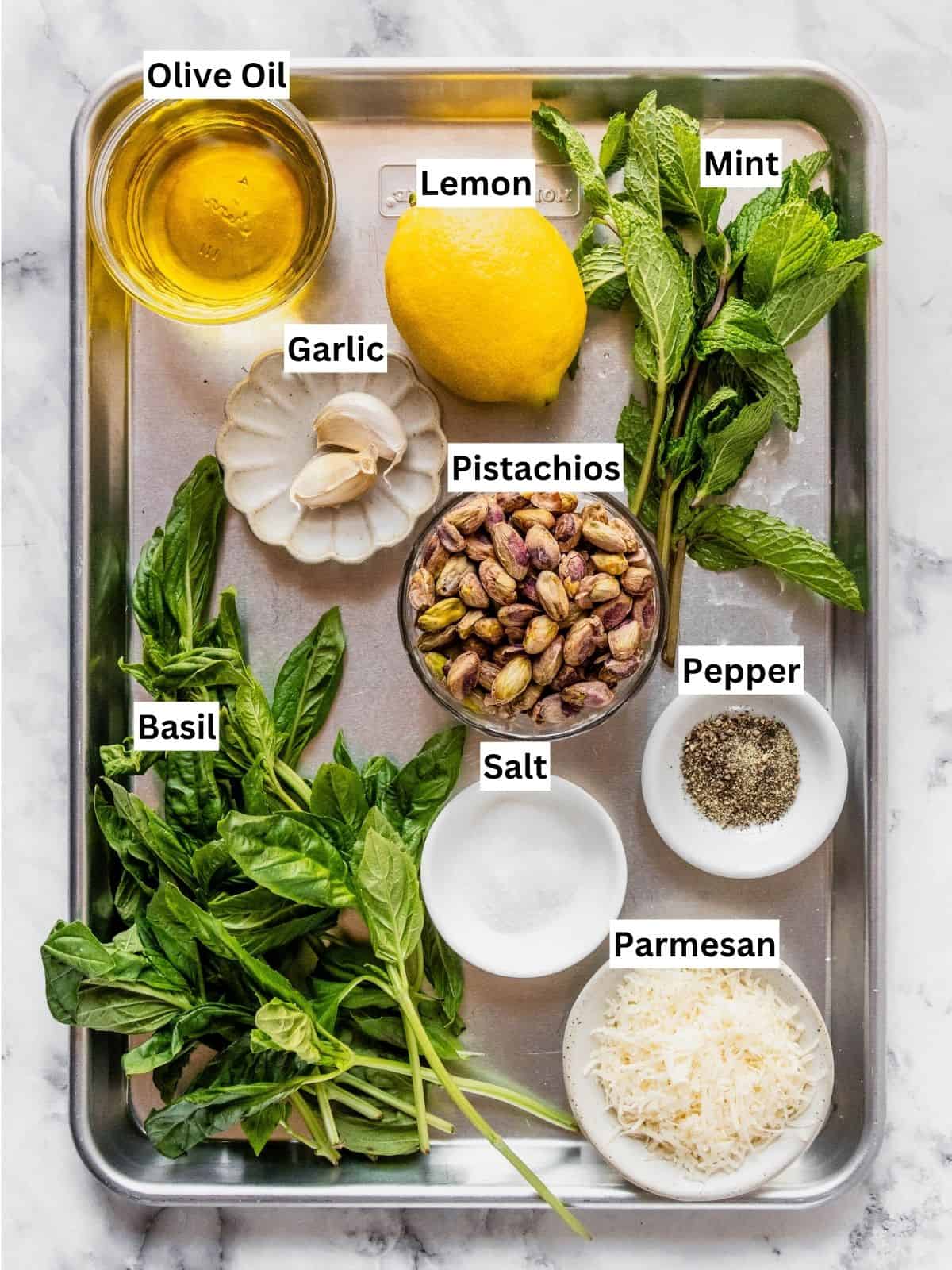
- Fresh Basil leaves: The classic pesto base; you can swap part of it with arugula for a peppery kick. I also use basil in my Walnut Basil Pesto recipe.
- Mint leaves: Adds brightness and freshness; optional but highly recommended. I also use mint in my Spring Pea Pesto recipe, so give that a try if you’re a fan of fresh mint.
- Parmesan Cheese: I like to use Parmigiano Reggiano. It adds saltiness and richness. I do prefer to grate it myself before adding it to the blender, but you can also use pre-grated. I don’t recommend using shelf-stable Parmesan in the can! Pecorino can work too for a sharper finish. Or if you want to keep the recipe vegan, use some nutritional yeast.
- Pistachios: Wouldn’t be a Pistachio Pesto without the pistachios. Use toasted pistachios if you can, but if you only have access to raw pistachios, you should toast them. You can certainly substitute with another nut, but if you have Almonds, try my Arugula Pesto or Sicilian Pesto.
- Lemon: You will need both lemon zest and juice. Lemon is not traditional in pesto, but I like using it for 2 reasons: it helps balance the pepperiness from the arugula and the richness from the olive oil and parmesan. It also helps preserve the pesto’s bright green color and reduces the chance of oxidation.
Refer to the recipe card at the bottom of this post for a full list of ingredients and quantities.
How to Make this Pistachio Pesto Recipe
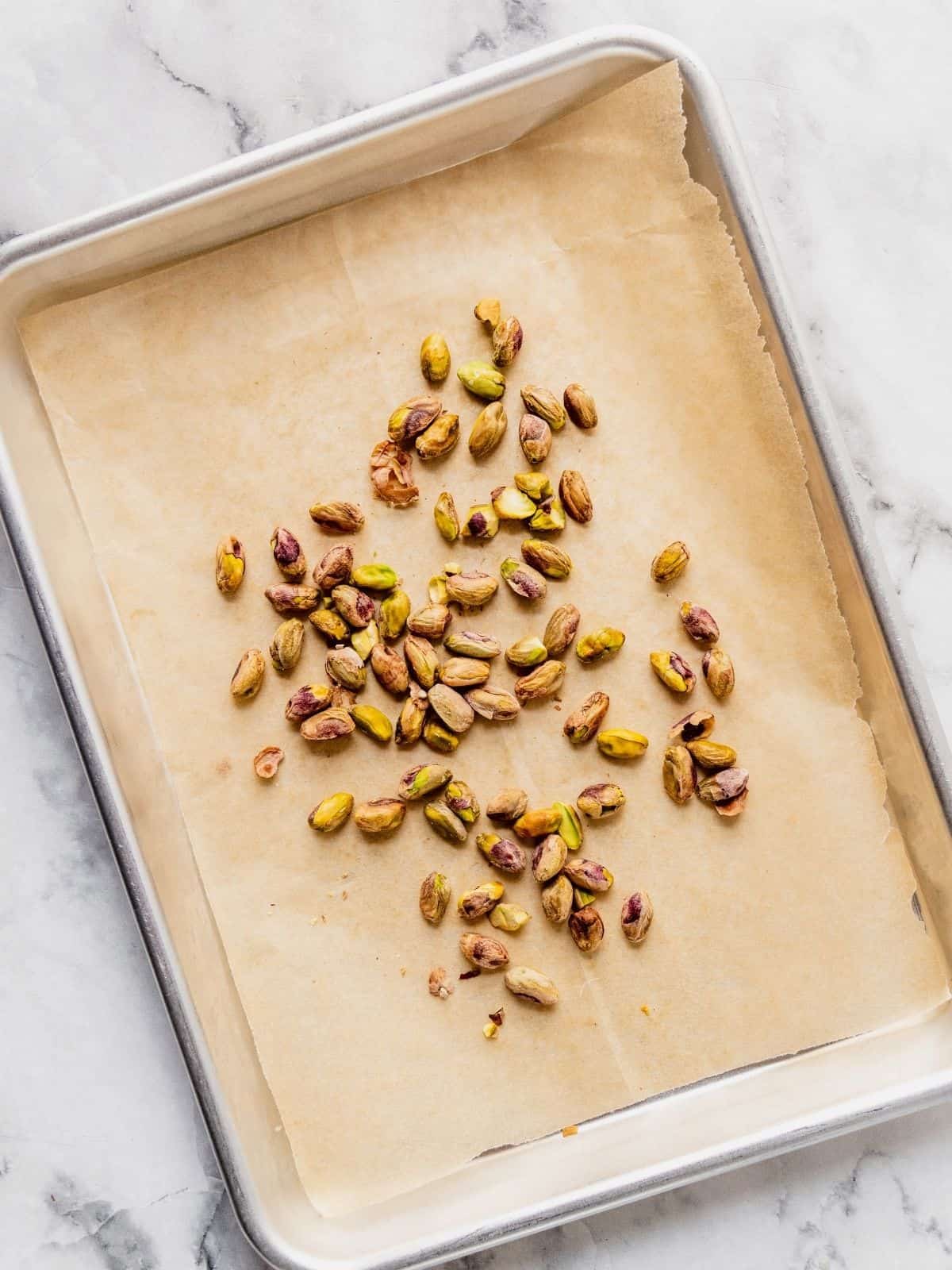
Step 1. Toast your Pistachios (Optional). If you are using untoasted pistachios, lightly toast them in a 300F oven for 5-10 minutes.
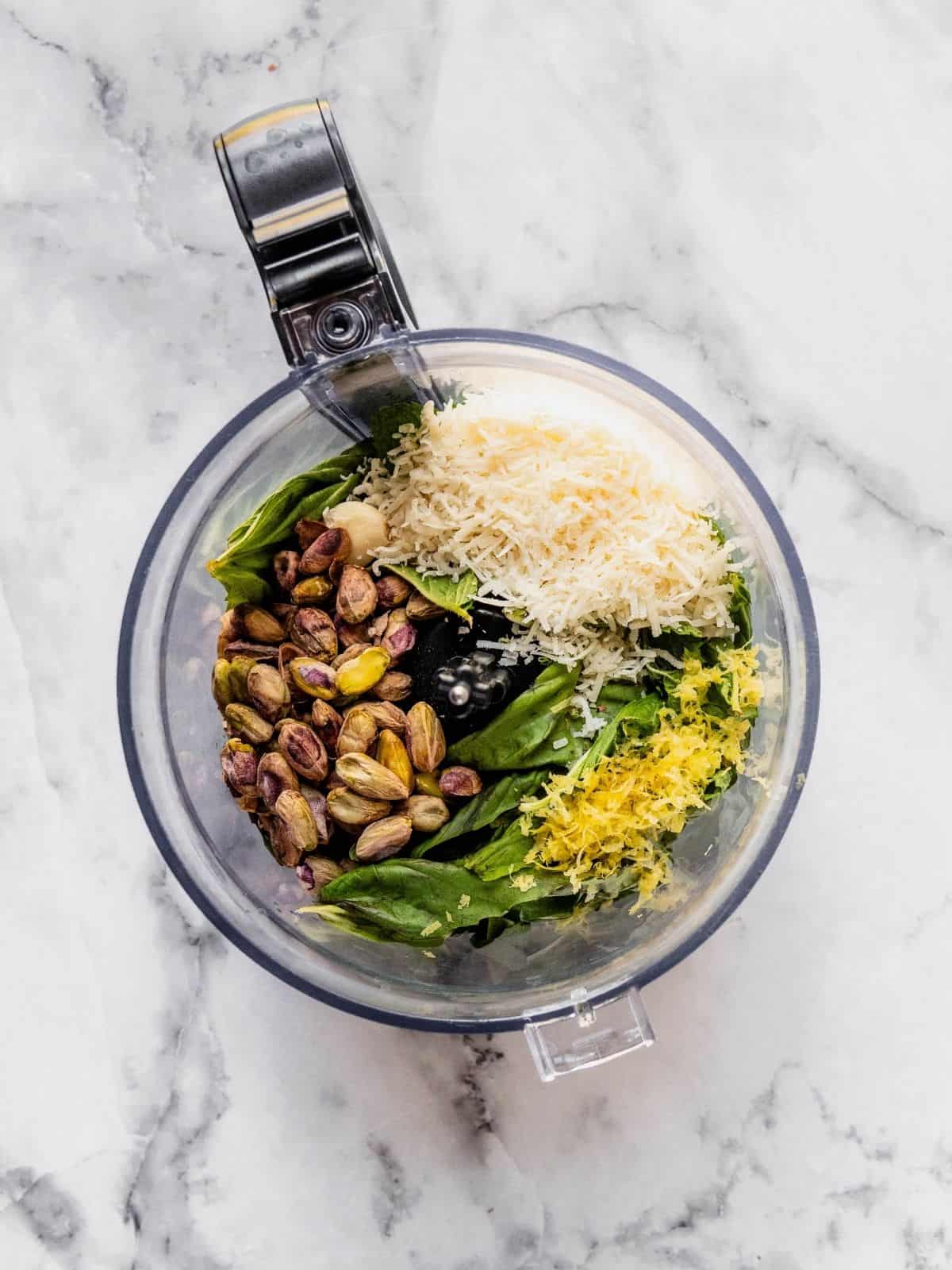
Step 2. Blend the Base. Add the basil, mint, pistachios, Parmesan, garlic, lemon zest, and lemon juice to a food processor. Pulse until everything is finely chopped and combined.
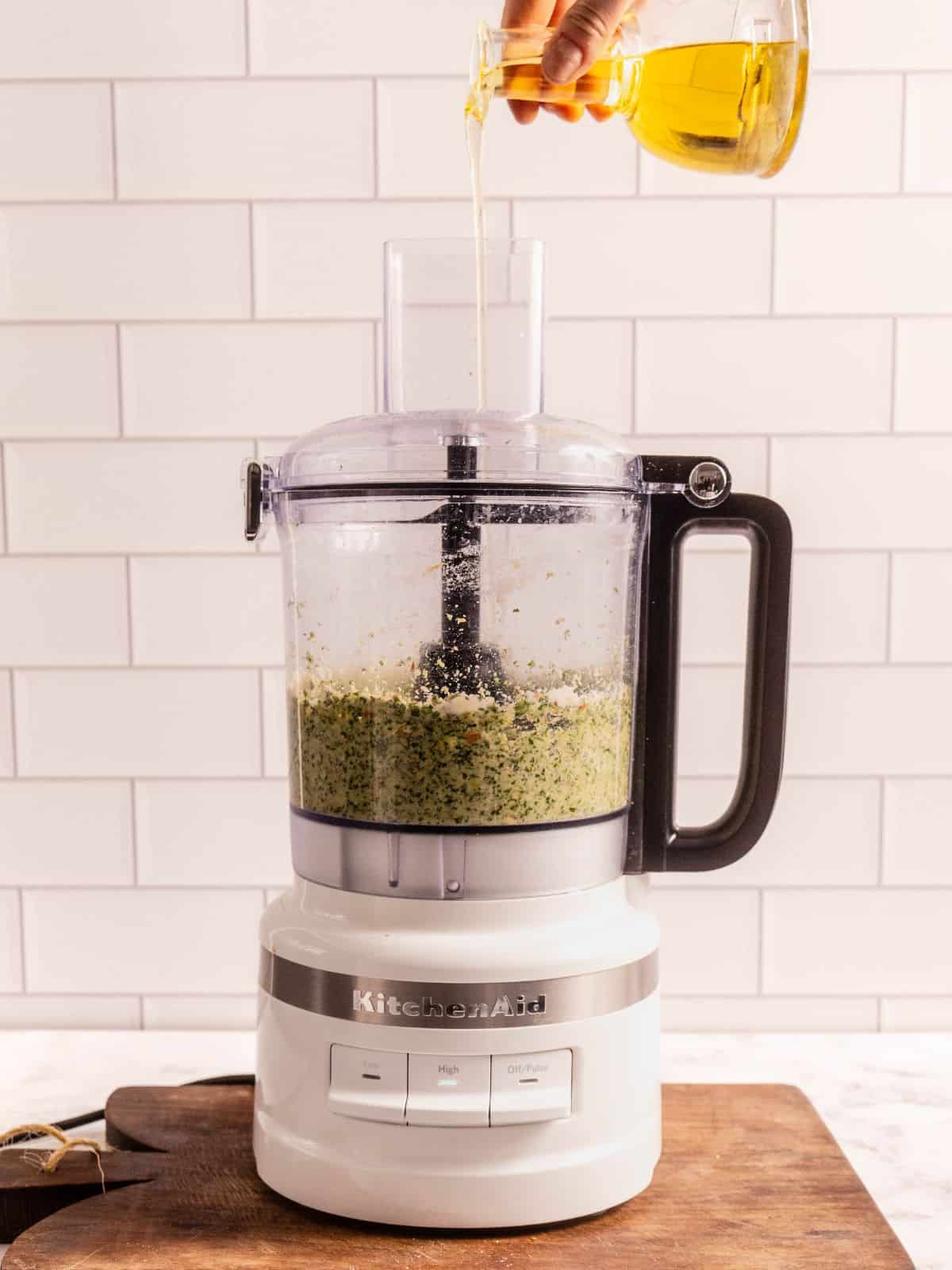
Step 3. Add Oil. With the processor running, slowly drizzle in the extra virgin olive oil until the pesto becomes smooth and creamy.
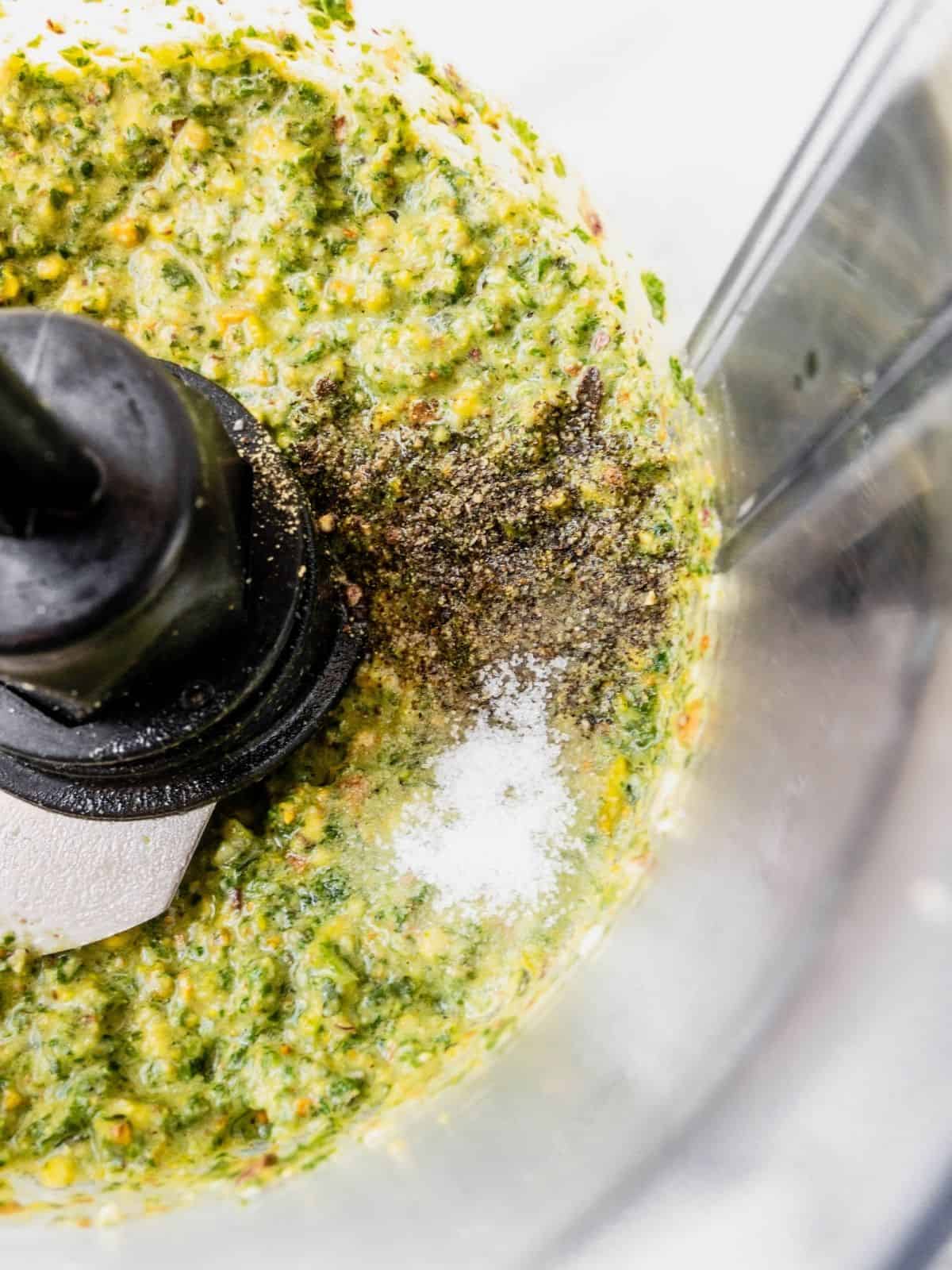
Step 4. Season. Season with salt and freshly ground black pepper. Blend briefly, then taste and adjust seasoning as needed.
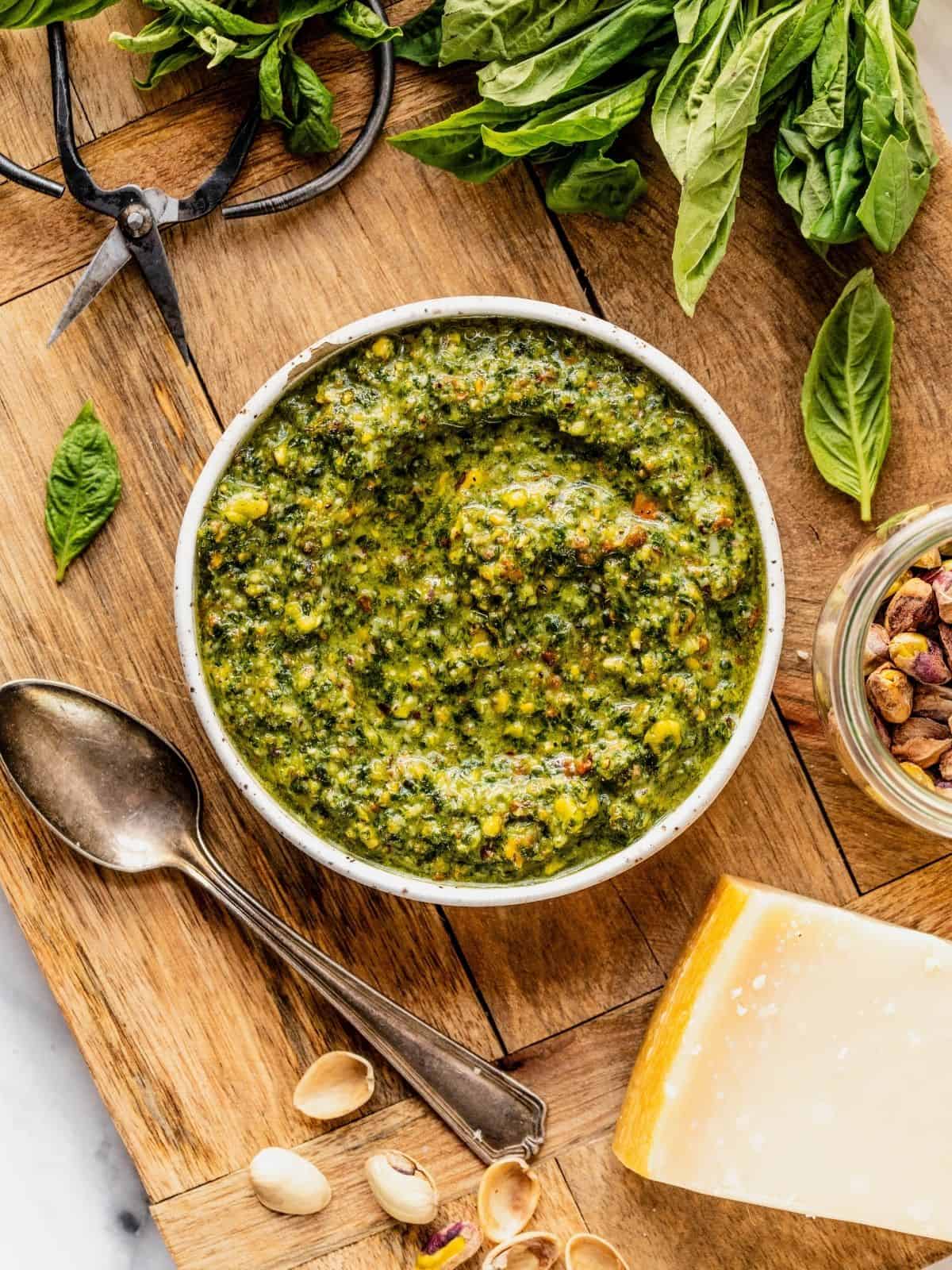
Step 5. Store or Serve. At this point, you can store your pesto in a glass jar in the fridge. Or toss with short pasta and finish with freshly grated Parmesan and more basil before serving.
Pairing and Menu Ideas
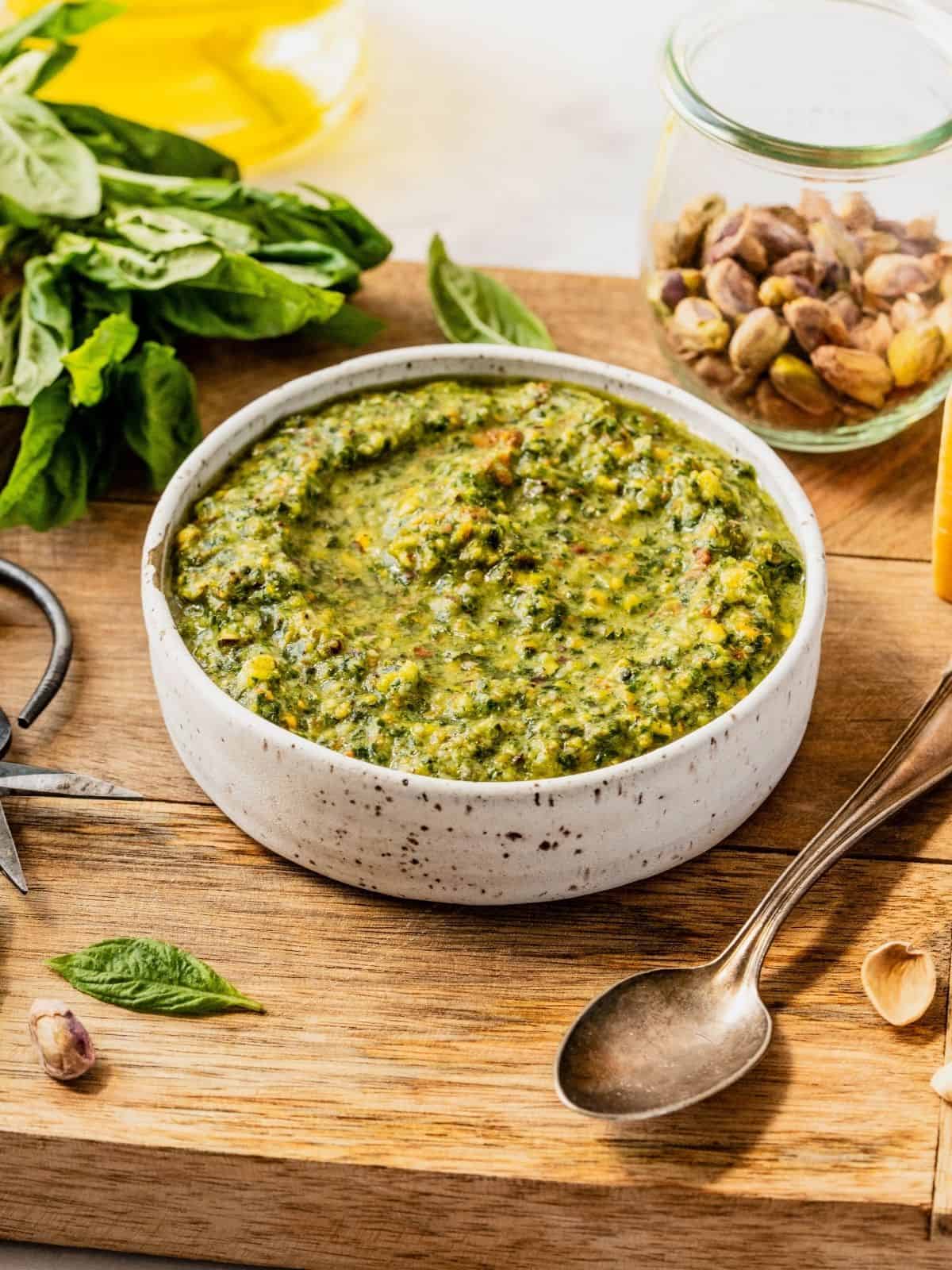
This pistachio basil pesto works well with short pasta because all those ridges and curves catch the sauce so well (for example, rigatoni, cavatelli or even gnocchi). I like finishing the bowl with extra Parmesan and basil leaves.
A few other ways to use this homemade pesto:
- Enjoy it with bread. Slather it on my Homemade No-Knead Focaccia Recipe or No-Knead Whole Wheat Loaf. Or as a sandwich or wrap spread.
- Use it in my Chicken Pesto Pasta Salad
- Layer it over the toasted bread in my Burrata Bruschetta, Eggplant Bruschetta or Goat Cheese Bruschetta before adding the rest of the ingredients.
Expert Tips
- Toast your pistachios lightly for deeper flavor, but don’t overdo it as they can turn bitter quickly. Or use toasted nuts to begin with.
- If your pesto is too thick, loosen it with a splash of pasta water or a bit more olive oil.
- Avoid over-blending; pulse just until smooth to keep a bit of texture.
- Store with a thin layer of olive oil on top to prevent browning.
- Go with the seasons. I love making different kinds of pesto depending on the season and what’s available, and this recipe is perfect if you grow your own mint or grow your own basil. For more Spring flavor, try my Ramp Pesto (Wild Leek) and Garlic Scape Pesto, too, if you have access to these seasonal ingredients.
Pistachio Pesto Recipe FAQs
Yes! You can make it up to 5 days in advance. Store it in an airtight container in the fridge with a thin layer of olive oil on top.
Keep leftovers refrigerated in a sealed glass container and use within 5 days. I never use a plastic container as it will most likely stain. Press plastic wrap directly onto the surface to minimize oxidation.
Absolutely, it’s my go-to way to store it. Freeze in small portions (ice cube tray works great). Thaw in the fridge and stir before using.
Other Pesto Recipes
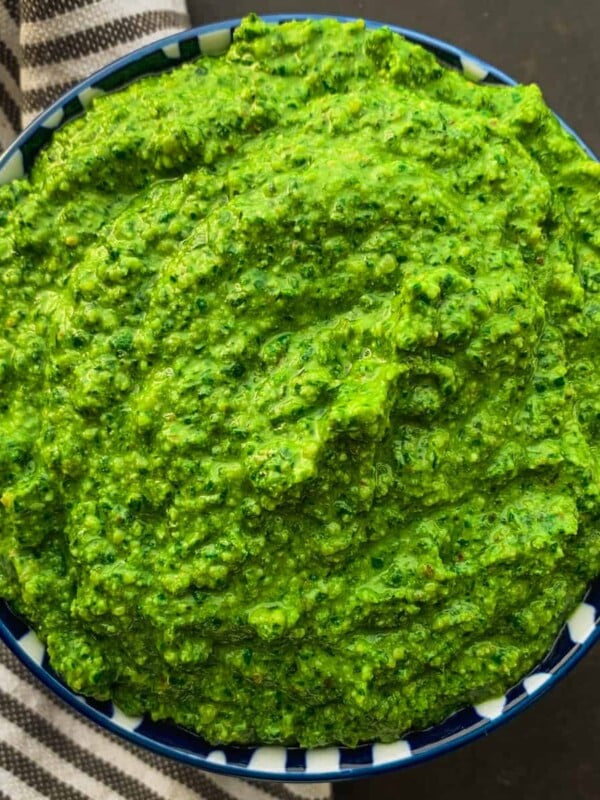
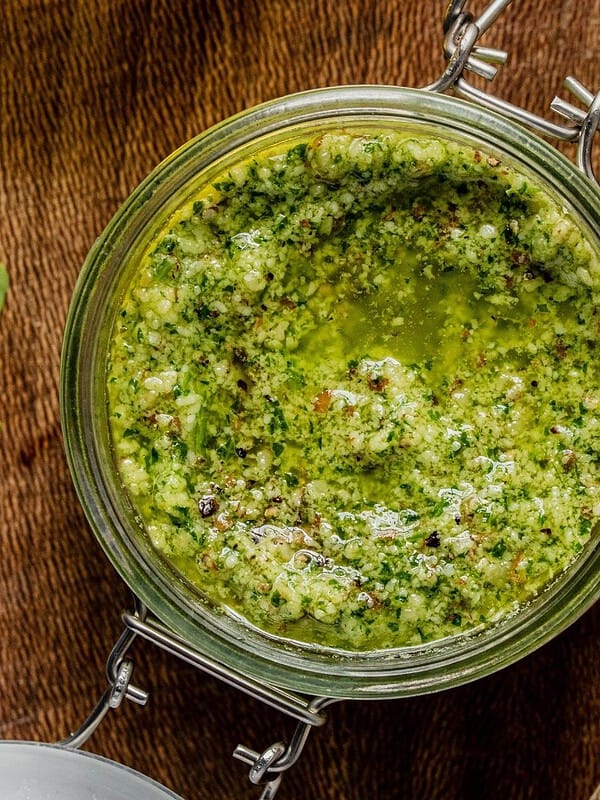

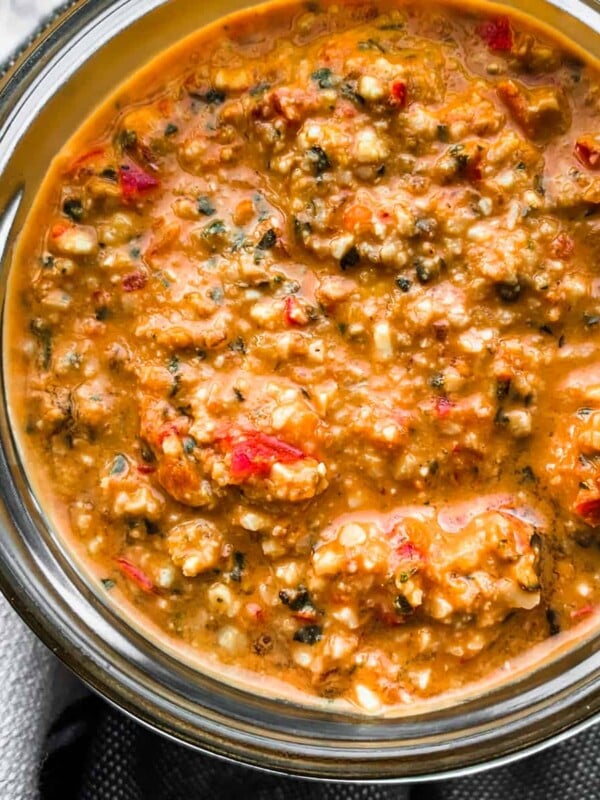
If you make this Pistachio Pesto or any other Condiment or Sauce on Urban Farm and Kitchen, please take a moment to rate the recipe ⭐⭐⭐⭐⭐ and leave a comment below. It’s such a help to others who want to try the recipe.
For more Urban Farm and Kitchen, follow along on Instagram, Facebook, and Pinterest, visit the Urban Farm Shop, or subscribe for new posts via email.
Pistachio Pesto (with Basil and Mint)
Equipment
- Small food processor – Affiliate link
Ingredients
- 2 cup Fresh basil leaves
- ½ cup Fresh mint leaves
- ½ cup Toasted shelled pistachios
- ½ cup Grated parmesan
- 1 tablespoon Lemon zest – From 1 lemon
- 2 tablespoon Lemon juice – From 1 lemon
- ⅓-½ cup Extra virgin olive oil
- Salt and pepper to taste
Instructions
- Toast your Pistachios (Optional). If you are using untoasted pistachios, lightly toast them in a 300F oven for 5-10 minutes.
- Blend the Base. Add the basil, mint, pistachios, Parmesan, garlic, lemon zest, and lemon juice to a food processor. Pulse until everything is finely chopped and combined.
- Add Oil. With the processor running, slowly drizzle in the extra virgin olive oil until the pesto becomes smooth and creamy.
- Season. Season with salt and freshly ground black pepper. Blend briefly, then taste and adjust seasoning as needed.
- Store or Serve. At this point, you can store your pesto in a glass jar in the fridge. Or toss with short pasta and finish with freshly grated Parmesan and more basil before serving.
Notes
- Fresh Basil leaves: The classic pesto base; you can swap part of it with arugula for a peppery kick.
- Mint leaves: Adds brightness and freshness; optional but highly recommended.
- Parmesan Cheese: I like to use Parmigiano Reggiano. It adds saltiness and richness. I do prefer to grate it myself before adding it to the blender, but you can also use pre-grated. I don’t recommend using shelf-stable Parmesan in the can! Pecorino can work too for a sharper finish. Or keep the recipe vegan by using nutritional yeast instead.
- Pistachios: Wouldn’t be a Pistachio Pesto without the pistachios. Use toasted pistachios if you can, but if you only have access to raw pistachios, you should toast them.
- You can make it in advance and keep it in the fridge until you’re ready to use it. It’s a great prep-ahead sauce for pasta nights, sandwiches, or grain bowls. It should last in the fridge for 5 days.
- Store the pesto in an airtight container in the refrigerator. I prefer glass over plastic as plastic Tupperware may stain. A thin layer of olive oil on top can help protect the surface from oxidation.
- Pistachio pesto freezes very well. You can freeze it for up to 3 months for the best quality, but I have used 6-month-old frozen pesto just fine. Portioning it into small containers or cubes makes it convenient.
Nutrition
Nutrition information is automatically calculated, so should only be used as an approximation.
 Like this recipe? Rate & comment below!